
Portland State Vikings vs Oregon Ducks, NCAAF Picks



Season stats ordered from most to least relevant. Longer bar, stronger national standing.
PRSTORE
Matchup Breakdown
Portland State's offense: Their passing attack ranks among the stronger in FCS football, giving them a real avenue to move the ball through the air. The ground game is a weak point and they struggle to convert on third down, making them dependent on situational passing to stay on schedule.
Oregon's offense: Oregon's passing game is among the better in FBS play, though the ground game sits near the bottom nationally and third-down efficiency has been a consistent problem in the 2026 season. They score at a solid clip but stalled drives have limited their overall output.
Oregon's defense: Oregon's defense has been among the more porous in FBS football in the 2026 season, surrendering yards freely in both the passing and running game. They have generated almost no turnovers all season, which removes a critical safety valve when offensive drives stall.
Portland State's defense: Portland State's defense has been among the worst in FCS football at preventing scoring and giving up yardage in the 2026 season. They do create takeaways at a respectable clip, which is their best route to flipping momentum, but they routinely allow opponents to pile up points before those opportunities arrive.
Overall: Oregon holds the decisive advantage here, with an FBS-caliber passing game going up against one of the worst scoring defenses in FCS football. Portland State's air attack is legitimate within FCS competition, but it steps into a different level of athleticism even against an Oregon defense that has been inconsistent. Turnover margin is the most direct path to a Portland State cover: they create them at a reasonable rate, while Oregon has generated almost none all season.
Quarterback Matchup
The two starters, and how each has actually played.
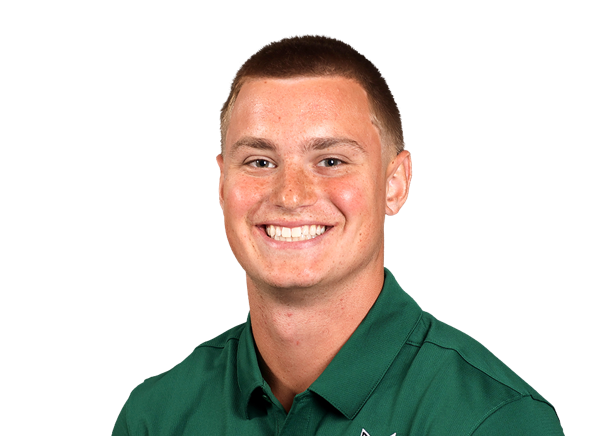
Gabe Downing
QB #5 · PRST
2026 season numbers
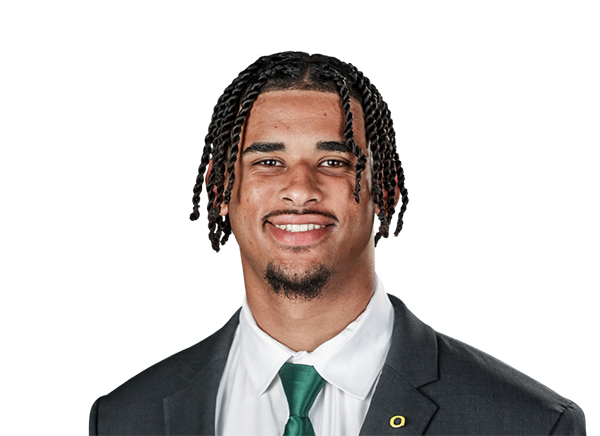
Dante Moore
QB #5 · ORE
2026 season numbers
The Read
Portland State's quarterback: Gabe Downing has been a serviceable starter in the 2026 season, completing passes at a reasonable rate but generating limited yardage per attempt, which points to an offense built largely on short and intermediate routes rather than pushing the ball down the field. He has been careful with the football but has not shown the capacity to consistently threaten a defense vertically.
Oregon's quarterback: Dante Moore has been one of the more efficient passers in college football in the 2026 season, combining a clean interception sheet with notably higher production per throw than most quarterbacks at his level. His profile reflects a passer who can attack multiple levels of the field rather than one who is simply managing the game.
The protection: Downing has actually been sacked less often in the 2026 season than Moore, which is worth noting. Moore has absorbed more hits but kept his efficiency and turnover numbers fully intact, suggesting he processes the field quickly and releases the ball under pressure rather than depending on a pristine pocket.
Overall: The gap between these two quarterbacks is the defining structural imbalance in this game. Moore is operating at a substantially higher level in the 2026 season across every meaningful indicator, while Downing is a proven competitor at the FCS level stepping into a significant jump in both competition and environment. The advantage under center belongs clearly to Oregon, and it shapes the ceiling of what Portland State can realistically do offensively.
Team Conditions
Schedule rest, recent form, and the current injury report.
PRSTORE
Rest
Standard week of preparation, 6 days rest.
Standard week of preparation, 6 days rest.
Form
None reported
2026 record 1-1 (home 1-0, road 0-1)
InjuryKey Players
None reported
J. Johnson (TE) · Questionable - Undisclosed
I. Hooks (WR) · Questionable - Undisclosed
J. Lott (WR) · Out - Hand
The Read
Portland State's availability: No real injury report is available for Portland State, so the health picture entering this game is simply unknown.
Oregon's availability: Oregon is without one wide receiver due to a hand injury and has a tight end and a second wide receiver listed as questionable. There is genuine uncertainty in the receiving room, though Oregon's roster depth at the program level limits how much these absences reshape the offense.
Rest and form: Both teams arrive on identical preparation windows, so neither holds an edge there. Portland State is deep in a losing run that has included several blowout defeats, while Oregon sits at even in the 2026 season after winning their opener before dropping their most recent contest.
Overall: Oregon holds the stronger position entering this matchup. They are at home, carry the roster quality of a major program, and their lone 2026 season loss came against legitimate competition. Portland State is struggling badly, with no meaningful injury transparency and a losing run built largely on wide-margin defeats. The questions in Oregon's receiving corps are real but modest relative to the broader gap between these two programs.
Weather & Stadium
Game-time conditions and whether they actually matter here.
72°F
Autzen Stadium
Open Air
Roof: Open air, conditions are in play
Temperature: 72°F, comfortable football weather, no effect on the passing game
Wind: 4mph, light enough to leave the passing and kicking game alone
Precipitation: 0% chance, conditions should stay dry
The Read
The stadium: Autzen Stadium is an open-air venue in Eugene, with no roof to neutralize what the atmosphere brings, though today it brings very little to contend with.
The conditions: Mild temperatures, virtually no wind, and a dry forecast add up to a neutral playing surface where neither offense nor defense gains a weather-based edge.
Overall: These conditions have no meaningful bearing on the game total or on either team's approach. Portland State and Oregon can each operate their preferred offensive styles without atmospheric interference, so the total should be decided entirely by matchup and personnel rather than environment.
Side Write-Up
Oregon's structural advantage in this matchup runs from the quarterback position down through the defensive matchup, and the spread reflects how complete that advantage is. Dante Moore has been one of the more efficient passers in college football in the 2026 season, combining production per throw well above most quarterbacks at his level with an interception sheet that stays clean even while absorbing pressure, and he operates against a Portland State defense that ranks among the worst in FCS football at preventing scoring. Portland State's Gabe Downing is a serviceable competitor within his level of competition but his profile points to an offense built on short and intermediate routes with a limited vertical dimension, and that ceiling drops further when facing FBS-level athleticism on the road at Autzen Stadium. Portland State arrives deep in a losing run built substantially on wide-margin defeats, with no injury transparency, a documented weak ground game, and chronic third-down conversion problems that leave the offense almost entirely reliant on situational passing to stay on schedule. The strongest counterargument to covering this number is that Portland State creates takeaways at a respectable rate, and with Oregon's defense generating almost no turnovers in the 2026 season, flipped possessions could stack points for Portland State in ways that chip away at a large spread. That argument loses because even with a favorable turnover margin, Portland State's offense lacks the sustained vertical threat and third-down efficiency to convert those opportunities into the kind of consistent scoring that makes a dent against a program with Oregon's roster depth. Oregon's receiving corps uncertainty is real but modest, and a passer with Moore's processing speed finds answers with a reshuffled target group far more readily than Portland State's defense finds answers to the talent gap it faces.
Final PickOregon -57.5
Total Write-Up
The over on this total is built on two genuinely compromised defenses and two offenses that have real paths to accumulating points against them. Oregon's defense has been among the more porous in FBS football in the 2026 season, surrendering yards freely through both the passing and running game, which gives Portland State's air attack, legitimate by FCS standards, a real surface to work against even stepping up in competition. From the other direction, Moore's efficiency and per-throw production go up against a Portland State scoring defense that ranks among the worst in FCS football, setting up a favorable volume scenario for the Oregon offense across four quarters. Neither team has a weather obstacle to navigate, with mild temperatures, virtually no wind, and a dry forecast producing a neutral surface where each offense can execute its preferred scheme without atmospheric interference. The strongest counterargument is that Oregon's own offensive limitations, including a ground game near the bottom of FBS nationally and persistent third-down problems, combined with uncertainty in the receiving room, could cap scoring output and hold the combined number below the line even against a porous FCS defense. That argument loses because the weakness in Portland State's defense is categorically severe enough to offset Oregon's inefficiencies, and two compromised defensive units facing each other means drive stalls on one side do not suppress total scoring the way they would against a defense capable of capitalizing. Portland State's takeaway ability could create short fields that accelerate point-scoring rather than suppress it, and with Oregon's defense generating almost no turnovers in the 2026 season, any possession advantage Portland State builds converts into points on the board rather than stops.
Final PickOver 67.5
This information is for entertainment purposes only and is not any form of financial or gambling advice. Sports involve high variance therefore always be responsible and manage your risk accordingly.
Other games this week



Free Promos for Your Next Bet!
Current offers for your area. Pick your region and the list updates.
Select Your Location