
Boston College Eagles vs SMU Mustangs, NCAAF Picks

Model Projection
These numbers come from a power-rating model built on the method Billy Walters lays out in his book Gambler.
Projected Spread
SMU -18.5
Projected Total
57.5
Projected Moneyline
SMU -635
This projection and current market action are supplementary and do not influence the final qualitative pick and analysis of today's game.
Season stats ordered from most to least relevant. Longer bar, stronger national standing.
BCSMU
Matchup Breakdown
Boston College's offense: Near the bottom of FBS in scoring and among the worst in the country at converting third downs, the Eagles struggle to sustain drives in the 2026 season. Their turnover rate is also among the highest nationally, routinely handing opponents extra possessions.
SMU's offense: The Mustangs carry one of the most prolific passing attacks in the country, generating yards at a per-play rate that puts them in rare company nationally. They score at a strong clip and convert third downs at an above-average rate, making them one of the more complete offensive units in FBS.
Boston College's defense: The stronger unit in this matchup, with an interception total that ranks among the very best in the country and an overall takeaway rate to match. Their pass rush and tackles for loss numbers also grade out well, and they hold opposing passing games to modest yardage compared to most of the country.
SMU's defense: Solid against the pass, ranking in the upper quarter of FBS in passing yards allowed, but the Mustangs surrender ground more freely than most teams nationally and their pass rush is below average. They do manufacture takeaways at a high overall rate, which matters against a Boston College offense already prone to giving the ball away.
Overall: SMU holds the larger structural advantage here, pairing one of the most productive passing offenses in the country with a defense that forces turnovers, pointed directly at a Boston College offense that gives the ball away at one of the highest rates nationally. BC's defense is the equalizer, capable of forcing turnovers at a high clip and generating short fields to keep the score manageable. But with SMU generating yards and points far more consistently than Boston College can answer through the 2026 season, the Mustangs are the more complete team in this matchup.
Quarterback Matchup
The two starters, and how each has actually played.

Mason McKenzie
QB #10 · BC
2026 season numbers
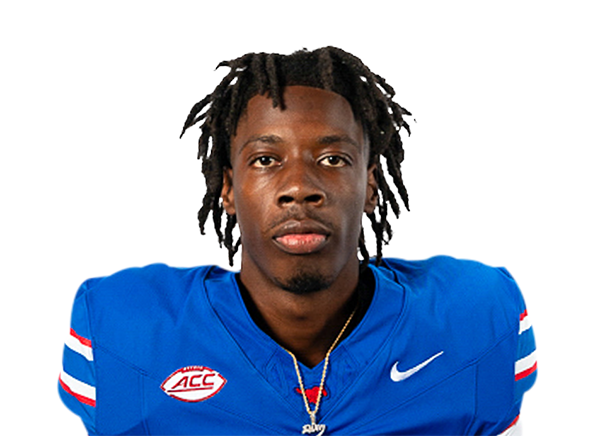
Kevin Jennings
QB #7 · SMU
2026 season numbers
The Read
Boston College's quarterback: Mason McKenzie has thrown more interceptions than touchdowns in the 2026 season and completes passes at a below-average clip. His production through the air has been modest, pointing to a quarterback who has not yet found consistent footing at this level.
SMU's quarterback: Kevin Jennings has been one of the more efficient passers in college football in the 2026 season, completing a high percentage of his attempts while throwing far more touchdowns than interceptions. He generates substantial yardage per throw, suggesting a quarterback comfortable attacking all levels of a defense.
The protection: McKenzie has been brought down behind the line at a meaningfully higher rate than Jennings, which compounds the pressure on an already unsteady passing game. Jennings has been kept clean far more consistently, giving him the time and rhythm that have driven his strong efficiency numbers in the 2026 season.
Overall: The gap under center is real and firmly in SMU's favor. Jennings has been more accurate, more productive, and considerably safer with the football than McKenzie throughout the 2026 season, and he is doing it behind better protection. That combination gives the Mustangs a structural advantage in the passing game that BC has shown little capacity to match.
Team Conditions
Schedule rest, recent form, and the current injury report.
BCSMU
Rest
Standard week of preparation, 7 days rest.
Standard week of preparation, 6 days rest.
Form
2026 record 2-1 (home 2-0, road 0-1)
2026 record 2-1 (home 1-0, road 1-1)
InjuryKey Players
R. Swanson (WR) · Probable - Undisclosed
B. Clough (TE) · Questionable - Undisclosed
B. MacCormack III (RB) · Out - Shoulder
E. Kelly (RB) · Probable - Undisclosed
M. Uter (TE) · Questionable - Undisclosed
C. Rhodes (RB) · Questionable - Undisclosed
L. Rhodes (RB) · Out - Knee
The Read
Boston College's availability: MacCormack III is out with a shoulder injury, which is a real loss in the backfield, while Clough at tight end is questionable and adds some uncertainty to their passing game. Swanson is probable and expected to play.
SMU's availability: SMU has the more complicated backfield picture, with L. Rhodes out with a knee injury and C. Rhodes also questionable, creating genuine depth concerns at running back. Kelly is probable and figures to absorb extra carries.
Rest and form: Both teams come in off nearly identical preparation windows, making rest essentially a non-factor. Boston College enters on a run of consecutive wins in the twenty twenty-six season, while SMU is coming off a loss in their most recent game.
Overall: Boston College brings better current momentum and a cleaner personnel situation than their opponent, though they arrive as the road team and their road form in the twenty twenty-six season has been a clear weakness. SMU is at home where they have been solid in the twenty twenty-six season, but their backfield is thin and they are trying to recover from a recent defeat. On balance, Boston College holds a modest edge in team conditions, though SMU's home setting keeps this from being one-sided.
Weather & Stadium
Game-time conditions and whether they actually matter here.
83°F
Gerald J. Ford Stadium
Open Air
Roof: Open air, conditions are in play
Temperature: 83°F, comfortable football weather, no effect on the passing game
Wind: 4mph, light enough to leave the passing and kicking game alone
Precipitation: 17% chance, conditions should stay dry
The Read
The stadium: Gerald J. Ford Stadium is an open air venue in Dallas, meaning all weather conditions are fully in play with no roof to neutralize them.
The conditions: Warm, calm, and almost certainly dry, the weather introduces no meaningful friction to either the passing game or the kicking game.
Overall: These are about as close to neutral conditions as an outdoor stadium can offer, and nothing here genuinely nudges the total in either direction. Boston College and SMU can each run their preferred offensive approaches without any weather factor complicating execution. The conditions are a non factor.
Side Write-Up
Kevin Jennings has been one of the more efficient passers in college football in the 2026 season, completing a high percentage of his attempts while throwing far more touchdowns than interceptions and generating substantial yardage per throw behind protection that keeps him clean far more consistently than Boston College's quarterback has been kept. Mason McKenzie, by contrast, has thrown more interceptions than touchdowns in the 2026 season, completes passes at a below-average clip, and gets brought down behind the line at a meaningfully higher rate, making BC's passing game both unsteady and self-defeating. SMU's defense sharpens that problem further, manufacturing takeaways at a high overall rate and pointing it directly at a Boston College offense that already gives the ball away at one of the highest rates nationally. The Mustangs are at home where they have been solid in the 2026 season, while Boston College's road form in the 2026 season has been a clear and documented weakness. Boston College carries better current momentum off consecutive wins, and their defense is the genuine counterargument here, ranking among the very best in the country in interceptions and holding opposing passing games to modest yardage compared to most of the country. That defensive edge can keep the score from getting out of hand and generate short fields, but it cannot manufacture offense for a BC unit that ranks near the bottom of FBS in scoring and among the worst in the country at converting third downs. SMU pairs one of the most productive passing offenses in the country with a defense that forces turnovers, and that combination gives the Mustangs a structural advantage too wide for Boston College's defensive strengths alone to bridge.
Final PickSMU
Total Write-Up
Boston College's offense ranks near the bottom of FBS in scoring in the 2026 season, converts third downs at one of the worst rates in the country, and turns the ball over at a nationally high clip, which means their possessions end early and often without points. BC's defense is built to hold up its end, ranking among the very best nationally in interceptions and holding opposing passing games to modest yardage, creating a unit that makes opposing scoring drives difficult and unreliable. SMU's backfield is thinned by injury with a running back out and another questionable, which limits their ability to sustain drives on the ground and adds unpredictability to their offensive rhythm beyond the passing game. The weather at Gerald J. Ford Stadium is warm, calm, and dry, introducing no environmental factor that pushes scoring upward, and the open-air setting is the only meaningful note in conditions that are otherwise entirely neutral. The strongest counterargument is SMU's passing attack, which is one of the most prolific in the country in the 2026 season and generates yards at a per-play rate that puts them in rare company nationally, meaning a high-point game from the Mustangs alone is a real possibility. But BC's defense holds opposing passing games to modest yardage and generates turnovers at a high rate, and the other half of the equation is a Boston College offense that is among the lowest-scoring units in FBS, meaning the aggregate scoring rate for this game pulls toward fewer total points rather than more. One side of this matchup simply cannot produce points consistently, and the defense it is facing is specifically built to suppress passing games, which makes the structural case for a low-scoring game considerably stronger than the case against it.
Final PickUnder
This information is for entertainment purposes only and is not any form of financial or gambling advice. Sports involve high variance therefore always be responsible and manage your risk accordingly.
On this page
Tools
Loading tools…
Other games this week

 NCAAF
NCAAF VS
VS Virginia Tech Hokies vs Boston College Eagles12:00 PM ET›NCAAF
 VS
VS Incarnate Word Cardinals vs Texas State Bobcats6:00 PM ET›NCAAF
 VS
VS William & Mary Tribe vs Duke Blue Devils3:30 PM ET›NCAAF
 VS
VS Central Arkansas Bears vs Florida State Seminoles3:00 PM ET›NCAAF
 VS
VS Texas Longhorns vs Tennessee Volunteers12:00 PM ET›NCAAF
 VS
VS Northern Illinois Huskies vs Georgia State Panthers2:00 PM ET›NCAAF
 VS
VS Central Michigan Chippewas vs Miami Hurricanes6:30 PM ET›NCAAF
 VS
VS Utah Utes vs Iowa State Cyclones3:30 PM ET›NCAAF
 VS
VS Troy Trojans vs Utah State Aggies7:30 PM ET›NCAAF
 VS
VS Colorado Buffaloes vs Baylor Bears12:00 PM ET›
Free Promos for Your Next Bet!
Current offers for your area. Pick your region and the list updates.
Select Your Location