
Houston Texans vs Indianapolis Colts, NFL Picks
All stats are publicly graded and pulled from real sportsbook accounts.
 RAZORLINESMLB Record: 589 - 466
MLB+$379k
NBA+$152k
NFL+$42k
Market Action
HOU @ IND
Live odds tracking
HOU
OWLS INSIGHTAPI / DATA10% OFF First 3-Months
✓Betting Splits✓Real-Time Odds✓Websocket Push
Model Projection
These numbers come from a power-rating model built on the method Billy Walters lays out in his book Gambler.
Projected Spread
HOU PK
Market
HOU -2.5 (-110)
Projected Total
53.5
Market
44.5 (O -110 / U -110)
Projected Moneyline
HOU -100
Market
HOU -135
This projection and current market action are supplementary and do not influence the final qualitative pick and analysis of today's game.
Season stats ordered from most to least relevant. Longer bar, stronger league standing.
HOUIND
Matchup Breakdown
Houston's offense: They score at a well above average rate and move the ball through the air consistently, putting them among the better offenses in the league. Volume production and solid red zone efficiency make them a genuine threat in the 2026 season, even if their per-play efficiency is closer to average.
Indianapolis's offense: They sit near the bottom of the league in both passing yards and overall yardage, and they convert third downs at a below average rate. The one genuine standout is red zone finishing, where they are the best in the entire league at turning opportunities into touchdowns.
Houston's defense: They defend the run well, ranking among the better units in the league in that area, and they have been stingy in the red zone when offenses get there. The big concern is pass defense, which has been one of the most generous in the league in the 2026 season, compounded by a total absence of turnovers forced.
Indianapolis's defense: Indianapolis has one of the worst defenses in the league in the 2026 season, giving up massive yardage totals through both the air and on the ground, and allowing points at a rate that only the very bottom of the league can match. Red zone defense sits around average, offering little added resistance once offenses get into scoring range.
Overall: Houston has the more complete profile here, with a scoring offense that outpaces anything Indianapolis has shown and a defense that, for all its secondary issues, at least stops the run well against a Colts team that cannot move the ball consistently. The clearest collision is Houston's passing attack against an Indianapolis defense that has been one of the most vulnerable through the air in the 2026 season, giving the Texans a straightforward path to points. Indianapolis needs their red zone finishing to compensate for an inability to generate volume, and that is a difficult formula against a Houston offense that can score in bunches.
Quarterback Matchup
The two starters, and how each has actually played.
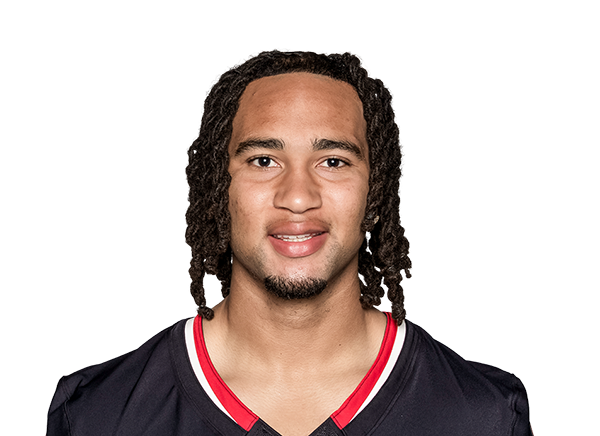
C.J. Stroud
QB #7 · HOU
2026 season numbers

Daniel Jones
QB #17 · IND
2026 season numbers
The Read
Houston's quarterback: Stroud has been among the sharper passers in the 2026 season, completing passes at a high rate while keeping the ball entirely out of defenders' hands. He generates meaningful yardage on each attempt and has given Houston a consistent aerial threat week over week.
Indianapolis's quarterback: Jones has been well below average in the 2026 season, producing modest yardage totals with limited efficiency and a turnover already on the ledger. He has not shown the ability to stress opposing secondaries with any regularity downfield.
The protection: Stroud has been sacked marginally more often than Jones in the 2026 season, yet his production has held up regardless of the pressure absorbed. Jones has been kept the cleaner of the two but has not converted that relative protection into efficient output, which points to the issue sitting with the quarterback rather than the pocket.
Overall: The gap at quarterback tilts clearly toward Houston in the 2026 season. Stroud is operating as a high-functioning passer while Jones has been a net drag on his offense, producing below the threshold a team needs to win close games. Indianapolis would need a performance from Jones well above what he has demonstrated in the 2026 season to neutralize the structural disadvantage this matchup creates for them.
Team Conditions
Schedule rest, recent form, and the current injury report.
HOUIND
Rest
Standard week of preparation, 7 days rest.
Standard week of preparation, 6 days rest.
Form
2026 record 0-1 (home 0-1, road 0-0)
2026 record 0-1 (home 0-1, road 0-0)
InjuryKey Players
N. Collins (WR) - SEP 19 · Out
J. Hummel (LB) - SEP 18 · Out
J. Clowney (DE) - SEP 18 · Out
H. To'oTo'o (LB) - SEP 16 · Injured Reserve
K. McDonald (DT) - SEP 12 · Injured Reserve
D. Giddens (RB) - SEP 19 · Questionable
A. Dulin (WR) - SEP 18 · Out
C. Towt (TE) - SEP 8 · Injured Reserve
S. McKeon (TE) - SEP 8 · Questionable
D.J. Montgomery (WR) - AUG 31 · Injured Reserve
The Read
Houston's availability: Houston is missing their top wide receiver in Nico Collins, which removes a genuine focal point from the passing game, and Jadeveon Clowney's absence thins the pass rush alongside several linebacker and interior defensive line losses. The attrition touches both sides of the ball in meaningful ways.
Indianapolis's availability: Indianapolis is without a receiver and has uncertainty at tight end, but the missing names are role players rather than featured contributors, keeping the overall impact relatively contained.
Rest and form: Houston holds a slight preparation edge heading into this game, though both teams enter the 2026 season winless and having dropped their respective home openers. Indianapolis lost to Houston in last season's playoffs, and Houston's own recent results show a team that has not carried momentum into the new year either.
Overall: Indianapolis is in the cleaner personnel situation, with their absences concentrated in depth roles rather than the kind of featured pieces Houston is losing at receiver and on the defensive edge. Houston's modest rest advantage is real but does not fully offset the heavier injury load they are carrying into this game. On balance, Indianapolis holds the more intact roster, while the head-to-head playoff result from last season is the clearest counterpoint in Houston's favor.
Weather & Stadium
Game-time conditions and whether they actually matter here.
Lucas Oil Stadium
Indoor
Roof: Indoor stadium, weather is not a factor tonight
The Read
The stadium: Lucas Oil Stadium is a fully enclosed indoor venue, which means controlled conditions with no wind, precipitation, or temperature variation in play tonight.
The conditions: Weather is a non-factor for this game. Both Houston and Indianapolis will operate in a neutral, climate-controlled environment that removes all atmospheric variables from the equation.
Overall: Nothing about the venue setting nudges the total in either direction on weather grounds alone. Houston and Indianapolis will each play to their offensive and defensive tendencies without any environmental interference. The total and team styles should be evaluated entirely on matchup and personnel factors rather than conditions.
Side Write-Up
Houston enters this game as the more complete team from top to bottom in the 2026 season, and the spread of 2.5 points reflects a gap the evidence supports as real. The Texans bring a scoring offense that operates well above average, with volume through the air and solid red zone efficiency, against an Indianapolis defense that has been one of the worst in the league by yardage and points allowed in the 2026 season. Stroud has been one of the cleaner and more efficient passers in the league, completing at a high rate without a turnover on his ledger, while Jones has been a genuine drag on his offense, producing modest totals with limited efficiency and a turnover already recorded in the 2026 season. Indianapolis's elite red zone finishing is the strongest case against Houston covering, as the Colts are the best in the entire league at converting opportunities into touchdowns and could keep the score tighter than the yardage gap would suggest. But Indianapolis cannot generate the volume to make that red zone strength matter consistently, and they have not shown the ability to move the ball through the air with any regularity in the 2026 season. Houston's secondary has been one of the most generous in the league and the absence of Nico Collins is a real loss at receiver, yet Stroud has maintained his production regardless of pressure absorbed all season, and Indianapolis's defense has no mechanism to slow a functioning aerial attack once it gets going. The quarterback gap is the kind of structural advantage that holds across a full game, and it sits at the center of why Houston covers.
Final PickHouston -2.5
Total Write-Up
The over finds its foundation in the collision between a Houston offense that scores at a well above average rate and an Indianapolis defense that has been one of the most permissive units in the entire league in the 2026 season, giving up massive yardage totals through the air and on the ground while allowing points at a rate only the very bottom of the league can match. Stroud's clean ball security means Houston possessions are unlikely to end in turnovers that cut scoring short, and the fully enclosed indoor setting at Lucas Oil Stadium removes every weather variable, letting the passing game operate without any atmospheric interference. Indianapolis contributes to the total from the other direction through their elite red zone finishing, converting at the best rate in the entire league in the 2026 season, which means that even when their offense cannot sustain drives, short fields and reasonable field position tend to produce touchdowns. The strongest counterargument to the over is Houston's defensive front, which ranks among the better run-stopping units in the league and has been stingy in the red zone, offering a realistic ceiling on what Indianapolis can generate offensively. But Indianapolis's red zone efficiency is the highest in the league in the 2026 season, meaning even a conservative drive total from the Colts can still produce points when opportunities arrive, and Houston's secondary has been one of the most generous units in the league, giving Jones at least some avenue to move the ball even against a defense that otherwise limits damage. The absence of Nico Collins trims Houston's ceiling at receiver, but Stroud has consistently produced regardless of the personnel around him, and the defense he faces in the 2026 season has not demonstrated the ability to contain a functioning passing attack. Enough scoring infrastructure exists on both sides of this game, playing in a controlled indoor environment, that the structural matchup points clearly toward a high-scoring final.
Final PickOver 45.5
This information is for entertainment purposes only and is not any form of financial or gambling advice. Sports involve high variance therefore always be responsible and manage your risk accordingly.
On this page
All stats are publicly graded and pulled from real sportsbook accounts.
RAZORLINESMLB Record: 589 - 466MLB+$379k
NBA+$152k
NFL+$42k
Tools
Loading tools…
Other games this week

 NFL
NFL VS
VS Carolina Panthers vs Atlanta Falcons1:00 PM ET›NFL
 VS
VS Minnesota Vikings vs Chicago Bears1:00 PM ET›NFL
 VS
VS Philadelphia Eagles vs Tennessee Titans1:00 PM ET›NFL
 VS
VS Pittsburgh Steelers vs New England Patriots1:00 PM ET›NFL
 VS
VS Green Bay Packers vs New York Jets1:00 PM ET›NFL
 VS
VS Cleveland Browns vs Tampa Bay Buccaneers1:00 PM ET›NFL
 VS
VS New Orleans Saints vs Baltimore Ravens1:00 PM ET›NFL
 VS
VS Cincinnati Bengals vs Houston Texans1:00 PM ET›NFL
 VS
VS Jacksonville Jaguars vs Denver Broncos4:05 PM ET›NFL
 VS
VS Las Vegas Raiders vs Los Angeles Chargers4:05 PM ET›NFL
 VS
VS Washington Commanders vs Dallas Cowboys4:25 PM ET›NFL
 VS
VS Seattle Seahawks vs Arizona Cardinals4:25 PM ET›NFL
 VS
VS Miami Dolphins vs San Francisco 49ers4:25 PM ET›NFL
 VS
VS Indianapolis Colts vs Kansas City Chiefs8:20 PM ET›
Free Promos for Your Next Bet!
Current offers for your area. Pick your region and the list updates.
Select Your Location