
Golden State Valkyries vs Portland Fire, WNBA Picks



Model Projection
These numbers come from a power-rating model built on the method Billy Walters lays out in his book Gambler, seeded from ESPN's own real WNBA power index.
Projected Spread
GS -7.5
No real live market line available yet.
Projected Total
168
No real live market line available yet.
Projected Moneyline
GS -265
No real live market line available yet.
This projection and current market action are supplementary and do not influence the final qualitative pick and analysis of today's game.
Season stats ordered from most to least relevant. Longer bar, stronger league standing.
GSPOR
Matchup Breakdown
Valkyries's offense: One of the least productive offenses in the league during the 2026 season, with poor shooting efficiency and low scoring output across the board. Their clearest strength is ball security, as they protect possessions better than any other team in the league.
Fire's offense: A middle-of-the-pack scoring unit with slightly above-average shooting efficiency and solid free throw accuracy. They give the ball away at a high rate, though, which consistently undercuts what their shooting can build.
Valkyries's defense: The best scoring defense in the league in the 2026 season, holding opponents to lower totals than any other unit. Defensive rebounding is a soft spot, but no team has been stingier about letting opponents find the basket.
Fire's defense: One of the worst defensive units in the league at preventing scoring, and the weakest in the entire league at securing defensive rebounds. Opponents have been able to generate offense against them with little resistance throughout the 2026 season.
Overall: The sharpest collision here is Valkyries' dominant defense running directly into a Fire offense that is only average at its best and careless with the ball. Fire's defense has been porous enough that even Valkyries' struggling offense may find enough room to produce. Possession management is the key lever, and Valkyries hold a clear advantage there on both sides of the ball, giving them the more complete profile in this matchup.
Scorer Matchup
Each team's real detected leading scorer, and how he has actually played.
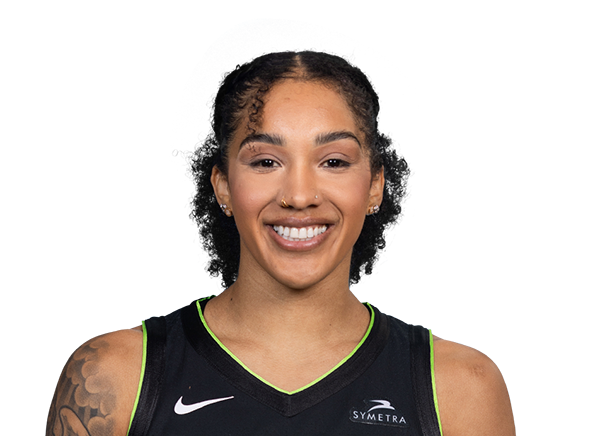
Gabby Williams
F · GS
2026 season numbers

Carla Leite
G · POR
2026 season numbers
The Read
Valkyries's leading scorer: Gabby Williams has been a steady, all-around contributor for the Valkyries in the 2026 season, mixing scoring with rebounding and playmaking rather than operating as a pure scorer. Her shooting holds up across the game without excelling in any particular area, which makes her reliable but not imposing.
Fire's leading scorer: Carla Leite has been the Fire's leading scorer and a high-volume playmaker in the 2026 season, posting an unusually high assist rate for a player who also paces her team offensively. Her scoring and creation work together, giving the Fire a more layered offensive option at the top of their attack.
The efficiency: Leite has been the sharper shooter of the two in the 2026 season, converting at a clearly better rate from the field, from three, and especially at the free throw line. Williams's efficiency is more modest by comparison, meaning her scoring output comes at a higher cost in possessions.
Overall: Leite holds a real edge over Williams in the 2026 season on volume, efficiency, and playmaking, making her the more impactful offensive player in this matchup. The gap is genuine rather than marginal, and it favors the Fire's scoring attack in a meaningful way.
Team Conditions
Schedule rest, recent form, and the current injury report.
GSPOR
Rest
Standard preparation, 3 days rest.
Standard preparation, 2 days rest.
Form
2026 record 29-11 (home 15-5, road 14-6)
2026 record 16-24 (home 8-12, road 8-12)
InjuryKey Players
J. Salaun (F) - SEP 12 · Out
G. Williams (F) - SEP 12 · Out
I. Rupert (C) - MAY 7 · Out
F. Buhner (F) - SEP 7 · Out
C. Leite (G) - AUG 29 · Out
L. Geiselsoder (C) - AUG 8 · Out
S. Barker (G) - JUL 24 · Out
S. Feagin (F) - JUL 9 · Out
The Read
Valkyries's availability: They are missing multiple frontcourt pieces, with forwards and a center sidelined. The absences are spread across positions rather than concentrated at a single critical spot, keeping the overall impact manageable.
Fire's availability: Fire carry a considerably deeper injury list, with players out across every position group including guards and frontcourt contributors. The volume of absences puts meaningful pressure on their available rotation.
Rest and form: Both teams arrive on standard preparation timelines, with Valkyries holding a slight edge in recovery. In the 2026 season, Valkyries have been among the stronger teams in the league and arrive on the back of a largely successful recent stretch, while Fire have been dropping most of their recent games and carry a losing record overall.
Overall: Valkyries hold the clear edge across every relevant condition. Their injury situation is less severe, their standing in the 2026 season is far stronger, and their recent form reflects a team playing with consistent confidence. Fire's extensive injury list and prolonged recent skid place them in a noticeably weaker position heading into this game.
Weather & Stadium
Whether conditions are ever a real factor in this sport.
Moda Center
Indoor Arena
Roof: Indoor arena, weather is never a factor in this sport
The Read
The arena: The game takes place at Moda Center, a fully enclosed indoor arena in Portland.
The conditions: Weather is not a factor in WNBA basketball, as every game in the league is played inside a climate-controlled building.
Overall: This panel carries no real bearing on the total or either team's style of play, as the controlled indoor environment is uniform across the entire league.
Side Write-Up
Portland Fire's path to the win runs through Carla Leite, and the scorer matchup makes a genuine case for it. Leite held a real edge over Gabby Williams in the 2026 season on volume, efficiency, and playmaking, converting at a clearly better rate from the field, from three, and at the free throw line while also generating assists at an unusually high rate for a player who paces her team in scoring. That combination gives the Fire a layered offensive option at the top of their attack that Williams, a steadier but more modest all-around contributor, cannot match. Valkyries carry the least productive offense in the league in the 2026 season, and even against Fire's porous defense, the weakest in the league at preventing scoring, their output is structurally capped by poor shooting efficiency and limited production across the board. Fire's carelessness with possessions is a real liability, but Leite's creation and efficiency give them a more reliable path to points than Valkyries' ball security advantage can fully offset. The strongest counterargument is that Valkyries hold better form, a stronger standing in the 2026 season, and a far less depleted roster than a Fire team missing players across every position group. But Valkyries' structural offensive limits mean their defensive superiority converts into a smaller margin than expected, and Leite's genuine edge over Williams as a scorer and creator gives the Fire the more impactful offensive weapon in this specific matchup.
Final PickPortland Fire
Total Write-Up
The Under case here is built on structural offensive constraints from both sides rather than one team's defense alone. Valkyries carry the least productive offense in the league in the 2026 season, with poor shooting efficiency and low scoring output embedded in their profile regardless of opponent, and even Fire's defense, the weakest in the entire league at preventing scoring and at securing defensive rebounds, cannot be expected to unlock production from an offense built around the league's lowest output. Valkyries' defense is the best in the league at suppressing scoring in the 2026 season, holding opponents to lower totals than any other unit, and it now faces a Fire offense that is only average at its best and consistently undercuts itself by giving the ball away at a high rate. That turnover problem is meaningful because it reduces the number of possessions where Fire's slightly above-average shooting efficiency can actually compound into points. Fire's already stretched rotation, thinned by absences across every position group, adds further strain to an offense that needs all its available pieces to function near its ceiling. The strongest counterargument is that Fire's defense is the worst in the league at allowing scoring, which should in theory inflate the offensive output of whoever they face. But the Valkyries' offense is the least productive in the league and structurally capped at the low end, meaning Fire's defensive porousness matters far less when the team attacking it simply is not built to convert that exposure into volume scoring.
Final PickUnder
This information is for entertainment purposes only and is not any form of financial or gambling advice. Sports involve high variance therefore always be responsible and manage your risk accordingly.
Other games this slate




Free Promos for Your Next Bet!
Current offers for your area. Pick your region and the list updates.
Select Your Location