
New England Patriots vs Seattle Seahawks, NFL Picks


All stats are publicly graded and pulled from real sportsbook accounts.
 TEP12NFL Record: 621 - 372
Golf+$10k
NFL+$8k
MLB+$2k
Market Action
NE @ SEA
Live odds tracking
SEA

OWLS INSIGHTAPI / DATA10% OFF First 3-Months
✓Betting Splits✓Real-Time Odds✓Websocket Push
Model Projection
These numbers come from a power-rating model built on the method Billy Walters lays out in his book Gambler.
Projected Spread
SEA -3
Market
SEA -3.5 (+100)
Projected Total
46.5
Market
44.5 (O -103 / U -110)
Projected Moneyline
SEA -145
Market
SEA -175
This projection and current market action are supplementary and do not influence the final qualitative pick and analysis of today's game.
Season stats ordered from most to least relevant. Longer bar, stronger league standing.
NESEA
Matchup Breakdown
New England's offense: Among the league's most efficient offenses in the 2025 season, moving the ball better per play than any other team and ranking near the top in both scoring and total yardage. They convert third downs at a solid clip, though their red zone touchdown rate sits right around the middle of the pack.
Seattle's offense: A legitimate top-scoring unit during the 2025 season, with strong yardage production both through the air and on the ground. The persistent concern is ball security, as the Seahawks ranked among the most turnover-prone teams in the entire league, a problem that regularly offset their offensive production.
Seattle's defense: The top scoring defense in the league during the 2025 season, and equally dominant at stopping opponents on third down, holding offenses to one of the lowest conversion rates of any team. Their red zone defense is among the best in the game, and they generate sacks and takeaways at a well-above-average clip.
New England's defense: A strong overall unit in the 2025 season, ranking among the better scoring defenses in the league and limiting yardage at a solid rate against both the run and the pass. The clear weakness is the red zone, where they allowed touchdowns at one of the highest rates in the league, and their pass rush and turnover numbers fall noticeably short of what Seattle's defense produces.
Overall: Seattle holds the more complete matchup in this game. Their defense is built to counter exactly what New England does well, particularly on third down, where the Seahawks are the most difficult team in the league to convert against. The direct collision to watch is New England's red zone defense, one of the softest in the 2025 season, against a Seattle offense that reaches scoring position consistently. The biggest variable for Seattle is ball security: a near-league-worst turnover rate has been their most consistent liability, and even a defense that does not generate a lot of takeaways will collect a few when an offense gives the ball away as freely as Seattle has.
Quarterback Matchup
The two starters, and how each has actually played.

Drake Maye
QB #10 · NE
2025 season numbers
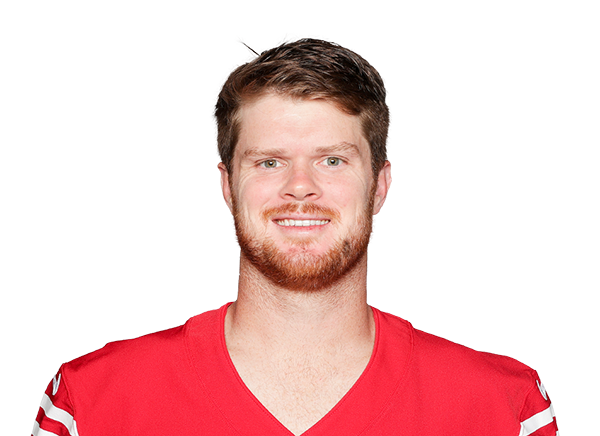
Sam Darnold
QB #14 · SEA
2025 season numbers
The Read
New England's quarterback: Drake Maye has been one of the sharper passers in the 2025 season, completing passes at a high rate while keeping turnovers well below the league average. His ability to create big plays downfield while limiting giveaways reflects a quarterback operating with real command.
Seattle's quarterback: Sam Darnold has been a capable enough starter in the 2025 season, moving the ball with some efficiency, but his interception rate has been a persistent problem that caps how far Seattle's offense can be trusted. The arm talent is present but his decisions have been too inconsistent to mask it.
The protection: Maye has been sacked far more frequently than Darnold in the 2025 season, which is a significant structural concern for New England on the road. Darnold has worked behind cleaner protection, though even a clean pocket has not fully suppressed his turnover tendencies.
Overall: Maye holds a clear edge at the position, with better accuracy, efficiency, and ball security across the 2025 season. The main complicating factor is protection, as New England's line has allowed considerably more pressure and Seattle's home environment will not make that easier. Darnold's turnover rate, however, gives the Patriots a real path to winning the possession battle regardless of how much heat Maye absorbs.
Team Conditions
Schedule rest, recent form, and the current injury report.
NESEA
Rest
First game of the season, full off-season of rest.
First game of the season, full off-season of rest.
Form
2025 record 14-3 (home 6-3, road 8-0)
2025 record 14-3 (home 6-2, road 8-1)
InjuryKey Players
T. Henderson (RB) - SEP 1 · Questionable
B. Baringer (P) - SEP 1 · Injured Reserve
K. Jacobs (LB) - SEP 1 · Injured Reserve
I. Iton (DT) - SEP 1 · Injured Reserve
E. Butler (S) - SEP 1 · Injured Reserve
M. Bryant (OT) - AUG 31 · Injured Reserve
H. Landry III (LB) - AUG 31 · Out
B. Schooler (S) - AUG 30 · Out
M. Montgomery (RB) - AUG 19 · Injured Reserve
A. Kight (OT) - SEP 1 · Injured Reserve
A. Smith (LB) - SEP 1 · Injured Reserve
P. Echols (LB) - SEP 1 · Injured Reserve
I. Charles (WR) - AUG 31 · Injured Reserve
Z. Charbonnet (RB) - AUG 30 · Out
T. Arnold (CB) - AUG 29 · Out
T. Horton (WR) - AUG 27 · Questionable
B. Clark (S) - AUG 26 · Injured Reserve
J. Bobo (WR) - AUG 22 · Injured Reserve
N. Emmanwori (S) - AUG 19 · Questionable
E. Wilson (RB) - AUG 19 · Questionable
The Read
New England's availability: The Patriots head into this game shorthanded across the secondary, with multiple safeties unavailable and an offensive tackle on injured reserve. Their running back situation also carries some uncertainty, though the thinning of the defensive backfield represents the more consequential gap.
Seattle's availability: Zach Charbonnet's absence at running back is the meaningful loss, removing a central piece of Seattle's ground game. The Seahawks are also missing a cornerback and a safety in coverage, though the rest of their offensive skill positions remain available.
Rest and form: Both teams carry equivalent preparation after a full offseason, so rest is a wash. Each franchise finished among the league's best in the 2025 season, but Seattle's playoff run ended with a victory over this exact New England opponent, giving the Seahawks the stronger recent result between these two clubs.
Overall: Seattle is in the better real-world position, playing at home against a team they eliminated in the 2025 playoffs. New England arrives with more meaningful absences in the secondary, which becomes a practical problem against an opponent that has already demonstrated the ability to move the ball against them. The Seahawks hold the edge in home comfort, recent form against this specific opponent, and a cleaner injury picture at the positions that matter most in scoring.
Weather & Stadium
Game-time conditions and whether they actually matter here.
78°F
Lumen Field
Open Air
Roof: Open air, conditions are in play
Temperature: 78°F, comfortable football weather, no effect on the passing game
Wind: 7mph, light enough to leave the passing and kicking game alone
Precipitation: 3% chance, conditions should stay dry
The Read
The stadium: Lumen Field is an open-air venue, so atmospheric conditions are always a live variable in principle, but the forecast here raises no real concern.
The conditions: Temperature sits in a comfortable range that leaves the passing game entirely unaffected, wind is light enough to have no meaningful influence on throws or kicks, and the chance of rain is negligible.
Overall: None of the forecast elements create a lean toward the under or constrain either team's offensive approach. New England and Seattle can both operate at full capacity through the air. The weather is a non-factor for this game.
Side Write-Up
New England arriving as a 3.5-point road underdog is a spread the evidence struggles to fully endorse for Seattle, because covering more than a field goal requires an offense to hold up its end, and Seattle's offense was one of the most turnover-prone units in the league throughout the 2025 season. Drake Maye finished the 2025 season as one of the more efficient and accurate passers in the league, keeping turnovers well below the league average while generating big plays downfield, a level of command that gives New England a real structural foundation even on the road. Seattle's turnover problem is persistent enough that even a Patriots secondary missing multiple safeties can expect to collect possessions from an offense that gives the ball away without needing much help from the defense. The strongest counterargument is Seattle's defense, the top scoring unit in the league during the 2025 season and the most difficult team in the game to convert against on third down, a combination that could keep New England's drive count low and the margin comfortable for the home side. That defensive case is strong, but it only produces a decisive result if Seattle's offense converts the field position it earns, and Darnold's interception rate across the 2025 season has been too unreliable to trust the Seahawks to build a cushion. Charbonnet's absence removes the central piece of Seattle's run game, leaving an offense already prone to mistakes even more reliant on a quarterback whose decision-making has been the unit's most persistent problem. New England's per-play efficiency and Maye's command at the position give the Patriots the structural foundation to stay within the number against even the league's best defense.
Final PickNew England +3.5
Total Write-Up
The under at 44.5 rests on a structural case built around the most complete scoring defense in the league and two offenses that each carry legitimate internal scoring limits. Seattle's defense was the top scoring unit in the league during the 2025 season and held opponents to one of the lowest third down conversion rates of any team, which means New England's offense will encounter the harshest environment in the game for sustaining drives and reaching scoring position. New England's offensive line has allowed Maye to be sacked far more frequently than Darnold across the 2025 season, and a road game against a Seattle pass rush that generates sacks and takeaways well above the league average only deepens that structural pressure problem. On Seattle's side of the ball, Darnold's interception rate has been the most persistent ceiling on the offense throughout the 2025 season, and even a New England defense that falls noticeably short of Seattle's takeaway numbers will collect possessions from a quarterback who produces turnovers at a near-league-worst rate. The strongest counterargument is that both offenses are genuine scoring threats operating in a weather-neutral environment, with comfortable temperatures and light wind leaving nothing external to suppress the points either team is capable of producing. But favorable conditions do not erase Seattle's defensive dominance, and the combination of elite third down suppression and a red zone defense among the best in the game imposes structural scoring limits that no benign forecast can offset. Charbonnet's absence also removes Seattle's primary ground threat, narrowing the Seahawks to a pass-heavy approach built around a quarterback whose decision-making has already cost the offense too many possessions throughout the 2025 season.
Final PickUnder 44.5

Written by
VIMB
47,000+
Followers Across All Socials
17+
Brand Partners
3+
Years Experience
1,000+
Games Tested
This information is for entertainment purposes only and is not any form of financial or gambling advice. Sports involve high variance therefore always be responsible and manage your risk accordingly.
All stats are publicly graded and pulled from real sportsbook accounts.
TEP12NFL Record: 621 - 372Golf+$10k
NFL+$8k
MLB+$2k
Tools
Loading tools…
Other games this week


Free Promos for Your Next Bet!
Current offers for your area. Pick your region and the list updates.
Select Your Location