
New York Jets vs Chicago Bears, NFL Picks

All stats are publicly graded and pulled from real sportsbook accounts.
 RAZORLINESMLB Record: 589 - 466
MLB+$379k
NBA+$152k
NFL+$42k
Market Action
NYJ @ CHI
Live odds tracking
CHI
OWLS INSIGHTAPI / DATA10% OFF First 3-Months
✓Betting Splits✓Real-Time Odds✓Websocket Push
Model Projection
These numbers come from a power-rating model built on the method Billy Walters lays out in his book Gambler.
Projected Spread
CHI -0.5
Market
CHI -3 (-109)
Projected Total
45
Market
43.5 (O -105 / U -110)
Projected Moneyline
CHI -105
Market
CHI -166
This projection and current market action are supplementary and do not influence the final qualitative pick and analysis of today's game.
Season stats ordered from most to least relevant. Longer bar, stronger league standing.
NYJCHI
Matchup Breakdown
New York's offense: Near the middle of the pack for total yardage in the 2026 season but struggles badly on a per-play basis and converts third downs at one of the lowest rates in the league, meaning drives consistently stall before they get going. Their one genuine strength is ball security, as they have taken care of the football better than any team in the league.
Chicago's offense: One of the most productive offenses in the 2026 season, anchored by the best rushing attack in the league and a near-top scoring rate. They move chains efficiently and convert third downs at a high level, though their red zone touchdown rate lags noticeably behind the rest of their numbers.
New York's defense: The stronger unit by a clear margin, allowing fewer total yards than any team in the league during the 2026 season and ranking near the top in both pass and rush defense. They also get off the field on third down at one of the best rates in the league, making sustained drives against them genuinely difficult.
Chicago's defense: Well below the league average in the 2026 season, giving up yardage at one of the higher rates in the league and allowing opponents to score touchdowns in the red zone at one of the worst rates. They generate takeaways at a solid pace, but the overall unit has been a clear liability.
Overall: The defining collision here is Chicago's ground-heavy offense running directly into a New York defense that has been among the most suffocating against the run in the league. If New York contains the rushing attack, Chicago has to win through the air, where they are far less dangerous. New York's offense is too inefficient to create much separation on its own, but their defense is strong enough to keep them in the game regardless of what the scoreboard shows.
Quarterback Matchup
The two starters, and how each has actually played.

Geno Smith
QB #7 · NYJ
2026 season numbers
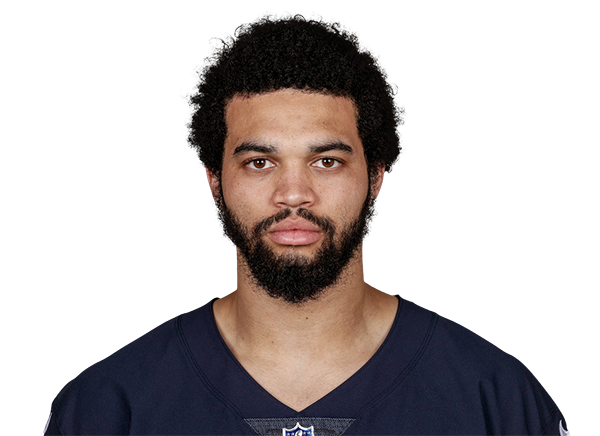
Caleb Williams
QB #18 · CHI
2026 season numbers
The Read
New York's quarterback: Geno Smith has been one of the more accurate passers in the 2026 season, moving the ball efficiently while keeping his turnover count clean. He operates within a controlled, high-percentage passing game that consistently limits self-inflicted damage.
Chicago's quarterback: Caleb Williams has generated touchdowns in the 2026 season but has also been turnover-prone at times, with a completion rate that trails Smith's by a meaningful margin. His yards-per-attempt numbers are comparable to Smith's, suggesting he can push the ball downfield, though his overall efficiency sits a level below.
The protection: Both offensive lines have allowed their quarterbacks to be brought down, with Williams absorbing pressure at a slightly higher rate than Smith. Neither quarterback has been under constant siege, but Chicago's front has offered marginally less security, a factor that tends to compound turnover risk for a quarterback who is already making the occasional costly mistake.
Overall: Smith holds the clearer edge under center heading into this matchup, combining a high completion rate with clean ball security that Williams has not consistently matched through the 2026 season. The protection picture is close but tilts toward New York, reinforcing Smith's advantage in a game where turnover margin figures to be decisive. Williams has the arm talent to keep Chicago competitive, but the weight of the efficiency gap sits on his side of the ball.
Team Conditions
Schedule rest, recent form, and the current injury report.
NYJCHI
Rest
Standard week of preparation, 7 days rest.
Standard week of preparation, 5 days rest.
Form
2026 record 1-1 (home 0-1, road 1-0)
2026 record 1-1 (home 0-1, road 1-0)
InjuryKey Players
None reported
C. Williams (QB) - SEP 27 · Out
A. Johnson Jr. (S) - SEP 27 · Injured Reserve
T. Bagent (QB) - SEP 26 · Questionable
S. Turner (DT) - SEP 24 · Out
N. Sewell (LB) - SEP 23 · Out
The Read
New York's availability: New York heads into this game with no meaningful absences and a clean bill of health across the roster.
Chicago's availability: Chicago is without starting quarterback Caleb Williams, and backup Tyson Bagent is listed as questionable, leaving the position genuinely unsettled heading into kickoff. The defense is also short-handed with starters missing at safety, defensive tackle, and linebacker.
Rest and form: Chicago is on a shorter rest cycle than New York, a moderate but real disadvantage in recovery and preparation time. Both teams carry identical records through their opening games of the 2026 season, each picking up a road win while dropping their home contest.
Overall: Chicago's quarterback situation is the defining factor in the current team conditions picture. Starting without a confirmed starter and potentially without their backup as well, against a healthy and better-rested opponent, places Chicago at a structural disadvantage on paper. New York's clean injury report and fuller week of preparation represent a real-world edge that the otherwise mirrored records in the 2026 season do not capture.
Weather & Stadium
Game-time conditions and whether they actually matter here.
Soldier Field
Open Air
Roof: Open air, game-time forecast not yet available
The Read
The stadium: Soldier Field is an open air venue on the Lake Michigan lakefront, where wind and cold are genuine factors as the season advances into fall. Whether conditions are meaningfully in play for this game depends on a forecast that is not yet available.
The conditions: Without a game time forecast in hand, the actual effect on passing efficiency, kicking range, and scoring pace cannot be assessed. Open air lakefront settings carry real weather potential, but nothing concrete is available to evaluate at this point.
Overall: Soldier Field has a history of producing difficult conditions for passing offenses and kickers, and its lakefront exposure means wind alone can put quiet pressure on scoring totals when it arrives. New York leans heavily on the passing game, so an adverse wind reading would matter more for them than for a Chicago offense built around the run. Because no forecast is yet available, the weather element is a pending variable rather than an active one.
Side Write-Up
Chicago runs the best rushing attack in the 2026 season, and that identity does not change when a backup takes snaps under center. New York's defense is legitimately elite, ranking near the top against both the pass and the run, but containing the most productive ground game in the league on the road is a different ask than the numbers suggest in isolation. New York's offense, meanwhile, converts third downs at one of the lowest rates in the league and struggles badly on a per-play basis, meaning even a shorthanded and injury-depleted Chicago defense gets consistent relief from three-and-outs. The strongest counterargument here is Chicago's quarterback situation: starting without a confirmed starter and potentially without the backup as well, against a healthy and better-rested opponent, is a genuine structural disadvantage that cannot be dismissed. But Chicago's offensive scheme runs through the ground game far more than through the passing game, so the depth chart uncertainty costs less here than it would for a pass-first offense. Geno Smith is the more efficient quarterback in the 2026 season and operates behind cleaner protection, but his offense has not shown the ability to create significant separation on its own, which limits how much New York can exploit Chicago's defensive vulnerabilities. The rest advantage, the injury report, and New York's ball security all contribute to a competitive picture, but Chicago's identity at the line of scrimmage is the defining structural edge in this matchup.
Final PickChicago -3
Total Write-Up
New York's defense has allowed fewer total yards than any team in the 2026 season and ranks near the top in getting off the field on third down, which puts a hard ceiling on what Chicago's offense can produce regardless of who is taking snaps. Chicago's offense, despite being among the most productive in the 2026 season overall, is being asked to move the ball with an unsettled quarterback against one of the most suffocating defenses in the league, and if that ground game gets contained, the passing game has to carry weight it has not consistently carried through the 2026 season. On the other side, New York's offense is too inefficient on a per-play basis and converts third downs at too low a rate to sustain drives against any competent defense, let alone a Chicago unit that generates turnovers at a solid clip even while struggling overall. The legitimate counterargument to the under is Chicago's defense, which has been a clear liability in the 2026 season and gives up red zone touchdowns at one of the worst rates in the league, creating real scoring opportunities for whoever lines up opposite them. But New York's offense has not shown the sustained efficiency needed to capitalize on defensive weaknesses at volume, and their low third down conversion rate means drives die before they reach the red zone where Chicago's defense bleeds most. Soldier Field's open air lakefront setting carries real weather potential as the season advances into fall, and any meaningful wind would tighten the passing game further and put additional pressure on scoring totals in a game where both offenses already face structural constraints. The combination of an elite New York defense, a depleted and unsettled Chicago passing attack, and a New York offense too inefficient to score freely creates too many convergent paths to a low-scoring game for the total to hold.
Final PickUnder 43.5
This information is for entertainment purposes only and is not any form of financial or gambling advice. Sports involve high variance therefore always be responsible and manage your risk accordingly.
On this page
All stats are publicly graded and pulled from real sportsbook accounts.
RAZORLINESMLB Record: 589 - 466MLB+$379k
NBA+$152k
NFL+$42k
Tools
Loading tools…
Other games this week
 NFL
NFL VS
VS Los Angeles Chargers vs Buffalo Bills1:00 PM ET›NFL
 VS
VS Carolina Panthers vs Cleveland Browns1:00 PM ET›NFL
 VS
VS New York Jets vs Detroit Lions1:00 PM ET›NFL
 VS
VS Houston Texans vs Indianapolis Colts1:00 PM ET›NFL
 VS
VS Kansas City Chiefs vs Miami Dolphins1:00 PM ET›NFL
 VS
VS Tennessee Titans vs New York Giants1:00 PM ET›NFL
 VS
VS Cincinnati Bengals vs Pittsburgh Steelers1:00 PM ET›NFL
 VS
VS Seattle Seahawks vs Washington Commanders1:00 PM ET›NFL
 VS
VS New England Patriots vs Jacksonville Jaguars1:00 PM ET›NFL
 VS
VS Arizona Cardinals vs San Francisco 49ers4:05 PM ET›NFL
 VS
VS Minnesota Vikings vs Tampa Bay Buccaneers4:05 PM ET›NFL
 VS
VS Baltimore Ravens vs Dallas Cowboys4:25 PM ET›NFL
 VS
VS Las Vegas Raiders vs New Orleans Saints4:25 PM ET›NFL
 VS
VS Los Angeles Rams vs Denver Broncos8:20 PM ET›
Free Promos for Your Next Bet!
Current offers for your area. Pick your region and the list updates.
Select Your Location