
Chicago Bears vs Seattle Seahawks, NFL Picks


All stats are publicly graded and pulled from real sportsbook accounts.
 THEMONEYPLAYSNFL Record: 949 - 531
NFL+$171k
MMA+$42k
Others+$23k
Market Action
CHI @ SEA
Live odds tracking
SEA

OWLS INSIGHTAPI / DATA10% OFF First 3-Months
✓Betting Splits✓Real-Time Odds✓Websocket Push
Model Projection
These numbers come from a power-rating model built on the method Billy Walters lays out in his book Gambler.
Projected Spread
SEA -1.5
Market
SEA -3 (-105)
Projected Total
44
Market
46.5 (O -107 / U -106)
Projected Moneyline
SEA -120
Market
SEA -170
This projection and current market action are supplementary and do not influence the final qualitative pick and analysis of today's game.
Season stats ordered from most to least relevant. Longer bar, stronger league standing.
CHISEA
Matchup Breakdown
Chicago's offense: Chicago generates more total yardage than nearly anyone in the league and runs the ball better than any team in the 2026 season. The passing game is respectable but solidly middle of the pack, and the Bears give the ball away more than most teams.
Seattle's offense: Seattle is a functional but unremarkable offense that struggles to stay on schedule on third down and has trouble finishing drives in the red zone. Ball security is a genuine problem, as the Seahawks turn it over among the most of any team in the 2026 season.
Seattle's defense: Seattle's defense is the best unit on the field in this game, leading the league in total and passing yards allowed while ranking near the top in third-down stops and turnover creation. The only real crack is red zone defense, where the Seahawks rank among the worst in the league.
Chicago's defense: Chicago's defense is legitimately strong, with the best third-down stop rate in the league and one of the better run defenses in the 2026 season. The Bears generate turnovers at a solid rate, though they are more susceptible through the air.
Overall: The most telling collision in this matchup is Seattle's dominant pass defense running directly into Chicago's middling passing attack, a clear structural disadvantage for the Bears through the air. Chicago's best counter is its ground game, but Seattle's run defense is among the better units in the league as well. The Bears' ball-security issues are a serious concern against a Seattle defense that creates turnovers at one of the highest rates in the 2026 season, and that matchup is the biggest swing factor in this game.
Quarterback Matchup
The two starters, and how each has actually played.
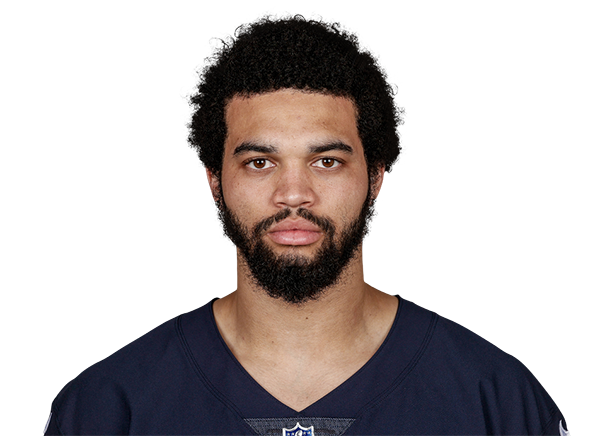
Caleb Williams
QB #18 · CHI
2026 season numbers
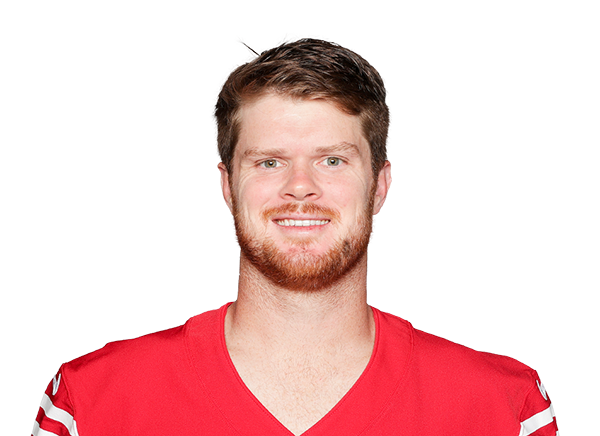
Sam Darnold
QB #14 · SEA
2026 season numbers
The Read
Chicago's quarterback: Caleb Williams has been one of the more efficient passers in the 2026 season, connecting at a high rate while protecting the ball with unusual care for a young quarterback. His downfield efficiency gives Chicago's offense a genuine ceiling.
Seattle's quarterback: Sam Darnold has produced touchdowns in the 2026 season but has surrendered them back through interceptions at nearly the same pace, keeping his overall efficiency well below the league's better passers. The accuracy and decision-making have been inconsistent.
The protection: Both lines have allowed their quarterback to be taken down at a comparable rate through the 2026 season, with Seattle giving up marginally more pressure. Neither starter has operated from a particularly clean pocket, but the pass-rush exposure has not dramatically favored either side.
Overall: Williams holds the meaningful edge under center, combining accuracy, efficiency, and turnover avoidance that Darnold has not approached in the 2026 season. Darnold's interception rate is a real ceiling on what Seattle can sustain through the air, particularly against a team whose quarterback does not give possessions away. The gap between these two starters is wide enough to matter in a game where field position and possession swings will be decisive.
Team Conditions
Schedule rest, recent form, and the current injury report.
CHISEA
Rest
11 days since the last game, more rest than a normal week.
8 days since the last game, more rest than a normal week.
Form
2026 record 5-2 (home 3-1, road 2-1)
2026 record 4-3 (home 3-1, road 1-2)
InjuryKey Players
A. Johnson Jr. (S) - OCT 26 · Out
C. Kmet (TE) - OCT 23 · Injured Reserve
M. Muhammad II (CB) - OCT 23 · Questionable
T.J. Edwards (LB) - OCT 22 · Out
C. Keenum (QB) - OCT 22 · Out
J. Loving (DT) - OCT 22 · Out
N. McCloud (CB) - OCT 22 · Out
K. Monangai (RB) - OCT 22 · Out
J. Sanborn (LB) - OCT 22 · Out
R. Shaheed (WR) - OCT 26 · Questionable
C. Cross (OT) - OCT 26 · Questionable
V. Jones Jr. (RB) - OCT 26 · Questionable
D. Lock (QB) - OCT 25 · Out
D. Thomas (LB) - OCT 25 · Out
C. O'Toole (LB) - OCT 25 · Out
C. Surratt (LB) - OCT 25 · Out
R. Henry Jr. (RB) - OCT 25 · Out
Z. Charbonnet (RB) - OCT 25 · Out
E. Arroyo (TE) - OCT 23 · Injured Reserve
The Read
Chicago's availability: Chicago is dealing with meaningful absences across the roster, with Cole Kmet lost for the season and T.J. Edwards out at linebacker, thinning the front seven. The secondary is also missing multiple cornerbacks, which adds up to real depth concerns rather than fringe losses.
Seattle's availability: Seattle's linebacker corps is significantly depleted with multiple starters unavailable, and Charles Cross is questionable at left tackle, which matters for pass protection. A handful of other pieces at receiver and running back are also uncertain for kickoff.
Rest and form: Both teams enter with more preparation time than a standard week, though Chicago has had a noticeably longer break. Chicago has been one of the stronger teams in the 2026 season and carries solid momentum, while Seattle has dropped most of their recent games and enters on a rough patch.
Overall: Chicago holds the edge in real-world readiness. Their injury losses are concentrated but manageable, while Seattle is undermanned at linebacker and dealing with uncertainty along the offensive line. The form picture reinforces that gap, with Chicago playing confidently through the 2026 season and Seattle struggling to find consistency.
Weather & Stadium
Game-time conditions and whether they actually matter here.
47°F
Lumen Field
Open Air
Roof: Open air, conditions are in play
Temperature: 47°F, comfortable football weather, no effect on the passing game
Wind: 7mph, light enough to leave the passing and kicking game alone
Precipitation: 9% chance, conditions should stay dry
The Read
The stadium: Lumen Field is an open-air venue, so weather is always theoretically in play. On this day, however, conditions are mild enough that the environment functions almost like a neutral site.
The conditions: Cool but comfortable temperatures leave the passing game unaffected, wind is light enough to have no meaningful impact on the aerial attack or the kicking game, and rain is unlikely. Nothing here meaningfully changes how either offense operates.
Overall: Chicago and Seattle figure to play in conditions that impose no external constraint on either side. Neither a cold-weather edge for the Bears nor any weather disruption to the Seahawks passing attack enters the picture. The total is best evaluated on matchup and roster grounds alone, as the sky and the stadium offer no lean in either direction.
Side Write-Up
Chicago taking three points on the road is supported by a real edge in quarterback efficiency, overall form, and preparation time heading into this game. Caleb Williams has been among the more efficient passers in the 2026 season, connecting at a high rate while protecting the ball with unusual care for a young quarterback, and that profile stands in sharp contrast to Darnold's interception rate, which puts a meaningful ceiling on what Seattle can sustain offensively. The strongest counterargument is Seattle's defense, which leads the league in total and passing yards allowed and ranks near the top in third-down stops, a structure genuinely hostile to a Bears offense that is only respectable through the air, but Chicago's ground game is the best in the 2026 season and gives the offense a path that does not depend on beating Seattle's strongest unit. Seattle's linebacker corps is significantly depleted going into kickoff, and uncertainty along the offensive line adds additional pressure on a passing game that Darnold has already struggled to run efficiently. Chicago has been one of the stronger teams in the 2026 season and carries real momentum, while Seattle has dropped most of their recent games and enters in a rough patch. The Bears' ball security concerns are real against a defense that creates turnovers at one of the highest rates in the 2026 season, but Darnold's own turnover tendencies mean Seattle is equally exposed to possession reversals. Chicago also enters noticeably fresher than a standard week would allow, and that edge in readiness compounds the advantages already in the Bears' column.
Final PickChicago +3
Total Write-Up
The case for the under at 46.5 rests on a structural mismatch that runs through both sides of the ball. Seattle's defense leads the league in total and passing yards allowed and ranks near the top in third-down stops, a profile directly hostile to Chicago's passing attack, which is only respectable and sits well short of elite. Chicago's own defense holds the best third-down stop rate in the league and is one of the better run defenses in the 2026 season, which puts a real ceiling on what Seattle can generate offensively. The strongest counterargument is Seattle's red zone defense, which ranks among the worst in the league and could allow Chicago to punch in scores on shorter fields, but the Bears' ball security issues against a defense that creates turnovers at one of the highest rates in the 2026 season mean those red zone trips may arrive less frequently than the matchup on paper would suggest. Sam Darnold's interception rate keeps a ceiling on Seattle's offense as well, and Chicago's defense generates turnovers at a solid rate, compounding the pressure on Darnold's decision-making. Neither team figures to move the ball freely through the air in a game where the dominant defensive unit belongs to Seattle, and where Chicago's most reliable offensive weapon is a ground game built for possession and not for scoring in bunches. Weather and stadium conditions impose no external constraint here, meaning the total lives entirely on the matchup, and across every layer of it the evidence points toward a game where scoring stays low and field position decides the outcome.
Final PickUnder 46.5

Written by
VIMB
47,000+
Followers Across All Socials
17+
Brand Partners
3+
Years Experience
1,000+
Games Tested
This information is for entertainment purposes only and is not any form of financial or gambling advice. Sports involve high variance therefore always be responsible and manage your risk accordingly.
All stats are publicly graded and pulled from real sportsbook accounts.
THEMONEYPLAYSNFL Record: 949 - 531NFL+$171k
MMA+$42k
Others+$23k
Tools
Loading tools…
Other games this week



Free Promos for Your Next Bet!
Current offers for your area. Pick your region and the list updates.
Select Your Location