
Virginia Tech Hokies vs California Golden Bears, NCAAF Picks


All stats are publicly graded and pulled from real sportsbook accounts.
 GreekOracleNCAAF Record: 158 - 83
Tennis+$26k
NCAAF+$25k
Soccer+$14k
Model Projection
These numbers come from a power-rating model built on the method Billy Walters lays out in his book Gambler.
Projected Spread
VT -10.5
Projected Total
57
Projected Moneyline
VT -270
This projection and current market action are supplementary and do not influence the final qualitative pick and analysis of today's game.
Season stats ordered from most to least relevant. Longer bar, stronger national standing.
VTCAL
Matchup Breakdown
Virginia Tech's offense: Among the top scoring and passing offenses in the country through the 2026 season, Virginia Tech moves the ball efficiently through the air and produces at a level very few programs nationally can match. The significant vulnerability is ball security, where they rank among the most turnover-prone teams in all of FBS.
California's offense: A below-average unit across nearly every category in the 2026 season, with a ground game that ranks among the worst nationally and a third-down conversion rate that makes sustaining drives a consistent challenge. The passing game offers modest upside, but overall production falls well short of most FBS programs.
Virginia Tech's defense: The most disruptive front in all of FBS in the 2026 season, leading the country in tackles for loss and ranking among the very best nationally in sacks, total yards allowed, and rush yards allowed. They are a top-end national defense in every meaningful category except generating turnovers, where they come in well below average.
California's defense: A unit with a clear split in the 2026 season, intercepting the ball at one of the highest rates in the country while simultaneously surrendering rushing yardage at a rate that ranks among the worst nationally. They can take the ball away through the air, but they struggle to stop the run.
Overall: Virginia Tech carries the more complete profile into this matchup, with a high-volume passing offense, a dominant defensive front, and run defense that ranks among the very best in the country. The most decisive collision on the field is Cal's already-struggling ground game running directly into that smothering Virginia Tech front. The one variable that keeps Cal in the conversation is Virginia Tech's turnover problem, which runs headlong into a secondary that creates takeaways through interceptions at a near-top-five national rate.
Quarterback Matchup
The two starters, and how each has actually played.

Ethan Grunkemeyer
QB #17 · VT
2026 season numbers
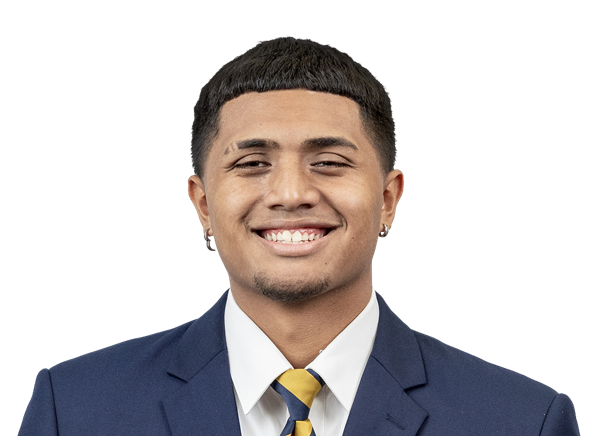
Jaron-Keawe Sagapolutele
QB #3 · CAL
2026 season numbers
The Read
Virginia Tech's quarterback: Grunkemeyer has put together a high-end 2026 season, completing passes at an exceptional rate with strong efficiency and very few costly turnovers. He is a decisive, accurate distributor who pushes the ball downfield without taking unnecessary risks.
California's quarterback: Sagapolutele has been a functional starter through the 2026 season, capable of moving the chains and showing some big-play ability, though his accuracy and ball security both fall a step below the top tier of college passers. He is a reliable operator rather than a difference-maker.
The protection: California's line has done a modestly better job of keeping their starter clean through the 2026 season, while Virginia Tech has given up sacks at a slightly higher rate. The margin between the two is not dramatic, but it is worth noting that Grunkemeyer has produced at a high level despite absorbing more pressure than Sagapolutele.
Overall: Grunkemeyer holds a clear and meaningful edge under center heading into this game, with sharper accuracy, greater production, and far better ball security than his counterpart has shown in the 2026 season. Sagapolutele is not a liability, but he is operating at a notably lower level of efficiency and control. The quarterback gap is the most defined personnel advantage in this matchup and it tilts decidedly toward Virginia Tech.
Team Conditions
Schedule rest, recent form, and the current injury report.
VTCAL
Rest
Standard week of preparation, 7 days rest.
Standard week of preparation, 7 days rest.
Form
2026 record 4-1 (home 2-1, road 2-0)
2026 record 2-2 (home 1-2, road 1-0)
InjuryKey Players
B. Davis (RB) · Questionable - Undisclosed
S. Peterkin (WR) · Questionable - Foot
T. Heath (WR) · Questionable - Undisclosed
K. Altuner (OG) · Questionable - Undisclosed
L. Stuewe (WR) · Questionable - Undisclosed
C. Vargas (RB) · Out - Leg
R. Walker (TE) · Questionable - Undisclosed
C. Boscia (WR) · Questionable - Undisclosed
T. Rogers (WR) · Questionable - Undisclosed
The Read
Virginia Tech's availability: Multiple skill position players are listed as questionable, with uncertainty spread across the receiver corps, running back, and an interior offensive lineman. No one is confirmed out, but the volume of question marks across the offense adds real uncertainty to their personnel picture.
California's availability: Running back C. Vargas is confirmed out with a leg injury, a genuine subtraction from their backfield. Several other skill players are also questionable, making California's availability picture somewhat thinner than Virginia Tech's heading in.
Rest and form: Both teams enter on identical rest, so preparation is a wash. Virginia Tech has been the steadier team in the 2026 season, with their only loss coming in a one-score game, while California has been inconsistent, mixing a blowout win with a blowout loss and managing just a narrow win over a lesser opponent.
Overall: Virginia Tech is both healthier and more consistent than California at this point in the 2026 season, and their road record is clean while California has actually struggled at home. The confirmed backfield loss for California, the uneven results, and the better Hokie form across the board put California in the weaker real-world spot despite holding home field.
Weather & Stadium
Game-time conditions and whether they actually matter here.
67°F
California Memorial Stadium
Open Air
Roof: Open air, conditions are in play
Temperature: 67°F, comfortable football weather, no effect on the passing game
Wind: 6mph, light enough to leave the passing and kicking game alone
Precipitation: 0% chance, conditions should stay dry
The Read
The stadium: California Memorial Stadium is an open-air venue, so weather is fully in play, though today's mild, dry conditions mean the elements offer no meaningful interference.
The conditions: Light wind and comfortable temperatures leave both the passing game and the kicking game completely undisturbed, and with no precipitation expected the field should remain in clean condition throughout.
Overall: Nothing in the forecast nudges the total in either direction, and neither Virginia Tech nor California gains or loses a stylistic edge from the conditions. The game should play out on a neutral weather surface, with no atmospheric reason to shade toward the over or under. Stadium and weather are non-factors for this matchup.
Side Write-Up
Virginia Tech arrives as the more complete team in this matchup, pairing a high-volume passing offense that ranks among the best programs nationally with a defensive front that leads all of FBS in tackles for loss in the 2026 season. Grunkemeyer holds a clear edge over Sagapolutele under center, with sharper accuracy, greater production, and significantly better ball security, making the quarterback gap the most defined personnel advantage in this game. Cal's offense has been below average across nearly every category in the 2026 season, ranking among the worst programs nationally in rushing production, and now faces that Virginia Tech front without their confirmed starting running back in C. Vargas. The most decisive collision on the field is Cal's already-struggling ground game running directly into the best run defense in the country, and Cal has no answer for it. Virginia Tech has been the steadier program throughout the 2026 season, with their only loss coming in a one-score game, while California has been inconsistent, posting a blowout win and a blowout loss before managing only a narrow victory over a lesser opponent. Cal has also struggled at home in the 2026 season despite holding home field in this game, which strips away the one structural edge that typically shifts the scales. The strongest counterargument is Cal's secondary, which creates interceptions at a near top-five national rate and runs directly into Virginia Tech's most genuine weakness in ball security. But Grunkemeyer has demonstrated the kind of decisive, accurate operation that separates him from most college passers, and Cal's offense lacks the capacity to convert those takeaways into enough points against this defense.
Final PickVirginia Tech
Total Write-Up
California's offense is among the most limited units in FBS in the 2026 season, ranking among the worst programs nationally in rushing production and converting at a rate on third down that makes stringing together drives a consistent challenge. The confirmed absence of C. Vargas removes the primary piece of Cal's already-struggling backfield before this game even begins. Virginia Tech's defense is the most disruptive front in all of FBS in the 2026 season, leading the country in tackles for loss and ranking among the very best nationally in sacks, total yards allowed, and rush yards allowed, which maps precisely onto Cal's core offensive identity. Sagapolutele is a functional operator but not a difference-maker, and his accuracy and ball security both fall a level short of what it takes to consistently manufacture points against a defense of this caliber. On the other side of the ball, Virginia Tech's offense is as productive as any in the country, but Cal's secondary creates interceptions at a near top-five national rate, representing a genuine ceiling on what Grunkemeyer can produce without feeding turnovers into unfavorable field position. Neither weather nor stadium conditions add any atmospheric pressure, with mild temperatures and light wind leaving both the passing and kicking games fully undisturbed. The strongest counterargument is that Virginia Tech's offense is capable of producing enough points on its own to clear most totals regardless of what Cal does offensively. But Cal's turnover-generating secondary introduces a real ceiling on Virginia Tech's scoring output, and Cal's offense has no credible path to accumulating points against this defensive front, meaning the scoring burden falls entirely on one side of the ball and the total collapses under that weight.
Final PickUnder

Written by
VIMB
47,000+
Followers Across All Socials
17+
Brand Partners
3+
Years Experience
1,000+
Games Tested
This information is for entertainment purposes only and is not any form of financial or gambling advice. Sports involve high variance therefore always be responsible and manage your risk accordingly.
On this page
All stats are publicly graded and pulled from real sportsbook accounts.
GreekOracleNCAAF Record: 158 - 83Tennis+$26k
NCAAF+$25k
Soccer+$14k
Tools
Loading tools…
Other games this week
 NCAAF
NCAAF VS
VS Wyoming Cowboys vs North Dakota State Bison3:30 PM ET›NCAAF
 VS
VS Bowling Green Falcons vs Miami (OH) RedHawks3:30 PM ET›NCAAF
 VS
VS West Virginia Mountaineers vs Iowa State Cyclones12:00 PM ET›NCAAF
 VS
VS Stanford Cardinal vs Wake Forest Demon Deacons12:00 PM ET›NCAAF
 VS
VS Toledo Rockets vs Ball State Cardinals2:00 PM ET›NCAAF
 VS
VS Boston College Eagles vs SMU Mustangs12:00 PM ET›NCAAF
 VS
VS Ohio State Buckeyes vs Iowa Hawkeyes3:30 PM ET›NCAAF
 VS
VS Akron Zips vs Central Michigan Chippewas3:30 PM ET›NCAAF
 VS
VS Louisville Cardinals vs NC State Wolfpack3:30 PM ET›NCAAF
 VS
VS Texas State Bobcats vs San Diego State Aztecs10:30 PM ET›
Free Promos for Your Next Bet!
Current offers for your area. Pick your region and the list updates.
Select Your Location