
Virginia Cavaliers vs SMU Mustangs, NCAAF Picks

All stats are publicly graded and pulled from real sportsbook accounts.
 GreekOracleNCAAF Record: 158 - 83
Tennis+$26k
NCAAF+$25k
Soccer+$14k
Model Projection
These numbers come from a power-rating model built on the method Billy Walters lays out in his book Gambler.
Projected Spread
SMU -3
Projected Total
55.5
Projected Moneyline
SMU -135
This projection and current market action are supplementary and do not influence the final qualitative pick and analysis of today's game.
Season stats ordered from most to least relevant. Longer bar, stronger national standing.
UVASMU
Matchup Breakdown
Virginia's offense: Virginia moves the ball at a middling clip in the 2026 season, with average yardage production through both the air and the ground. The bigger concern is third down, where the Cavaliers convert at one of the lowest rates in the country, and their overall efficiency per play ranks in the bottom third nationally.
SMU's offense: SMU's passing attack is among the most productive in the country in the 2026 season, and the Mustangs convert third downs at a rate that puts them near the top nationally. The main vulnerability is ball security, where SMU gives the ball away far more often than most teams at this level.
Virginia's defense: Virginia's defense is the stronger unit in this matchup, with pass coverage and interception numbers that both rank among the best in the country. The Cavaliers give up fewer points and fewer total yards than the vast majority of FBS programs, though they are less effective stopping the run and have not generated many takeaways despite their strong coverage.
SMU's defense: SMU's defense generates pressure at a very high rate, with sack and tackles for loss totals that rank among the top units nationally, and the Mustangs force turnovers at one of the better rates in the country. Pass coverage is solid but a level below Virginia's, and the Mustangs give up more points per game than the Cavaliers allow.
Overall: Virginia's best asset, its pass coverage, lands directly against SMU's best asset, its passing attack, making that matchup the central tension of this game. SMU's disruptive front compounds the problem for a Virginia offense that already struggles badly to sustain drives and convert on third down, which could keep the Cavaliers from staying on the field long enough to matter. SMU holds the more complete profile when both sides of the ball are weighed, but Virginia's coverage unit gives the Cavaliers a real path to keeping the score manageable.
Quarterback Matchup
The two starters, and how each has actually played.
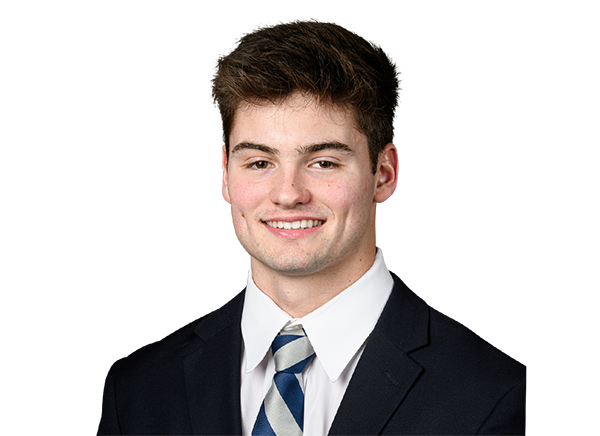
Beau Pribula
QB #7 · UVA
2026 season numbers
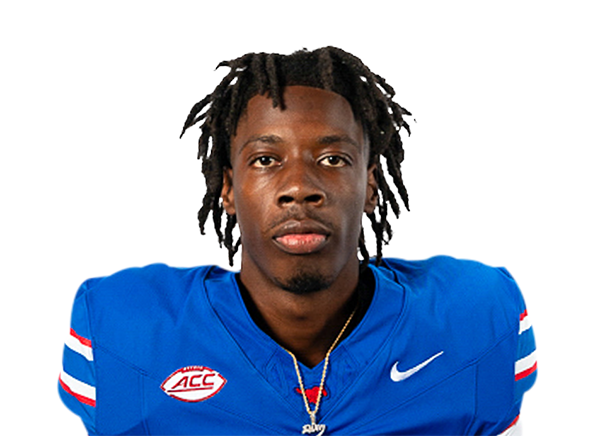
Kevin Jennings
QB #7 · SMU
2026 season numbers
The Read
Virginia's quarterback: Beau Pribula has been a careful, efficient operator in the 2026 season, rarely turning the ball over and moving it well enough when given clean looks, but working within a modest volume system that does not ask him to carry the offense.
SMU's quarterback: Kevin Jennings has been a high-volume, high-efficiency passer in the 2026 season, completing passes at a sharp clip while generating chunk yardage at a rate well above the national norm, though he has been loose with the football at times.
The protection: Pribula has absorbed punishment behind a line that has struggled to keep him upright, which limits what the Virginia offense can build on, while Jennings has operated in a clean pocket nearly all season, giving him the time and comfort to push the ball downfield.
Overall: The gap at quarterback favors SMU clearly, with Jennings operating at a higher level across nearly every meaningful dimension in the 2026 season. Pribula's ball security is a genuine strength, but Jennings' combination of accuracy, volume, and clean pocket time gives SMU a structural advantage in the passing game. If Virginia's protection issues carry into this game, that gap widens further.
Team Conditions
Schedule rest, recent form, and the current injury report.
UVASMU
Rest
Standard week of preparation, 6 days rest.
Coming off a bye, 14 days between games.
Form
2026 record 3-2 (home 3-0, road 0-1)
2026 record 4-1 (home 3-0, road 1-1)
InjuryKey Players
D. Newton-Short (WR) · Questionable - Hamstring
T. Hamann (K) · Questionable - Undisclosed
J. Stevens (RB) · Questionable - Undisclosed
P. Lewis (RB) · Questionable - Undisclosed
T. Ward (WR) · Out - Undisclosed
J. Hammond (DL) · Out - Undisclosed
N. Reed (K) · Questionable - Undisclosed
Y. Knight (WR) · Questionable - Undisclosed
I. Singleton IV (DL) · Out - Undisclosed
Y. Smith (WR) · Questionable - Undisclosed
E. Kelly (RB) · Probable - Undisclosed
M. Uter (TE) · Questionable - Undisclosed
C. Rhodes (RB) · Questionable - Undisclosed
L. Rhodes (RB) · Out - Knee
The Read
Virginia's availability: Virginia is without a wide receiver and a defensive lineman outright, and both of their listed running backs are questionable heading into this road game. The backfield uncertainty is the most meaningful piece, as thinning that position group complicates their options on offense away from home.
SMU's availability: SMU carries a longer injury list that touches multiple skill positions, including a pair of wide receivers and a crowded running back room where L. Rhodes is confirmed out with a knee injury and others are in doubt. The volume of questionable designations at offensive skill positions is worth noting, even if the Mustangs have enough depth to absorb some of it.
Rest and form: SMU enters with a meaningful rest advantage after a bye week, giving them extra time to manage that injury list and prepare, while Virginia is working off a standard week of preparation. In the 2026 season SMU has been steadier overall, currently riding a winning streak, while Virginia is coming off a blowout loss and has yet to win on the road.
Overall: SMU is in the stronger position across every real-world condition entering this game. They are better rested, playing at home where they have been unbeaten in the 2026 season, and have won consecutive games to close their recent stretch. Virginia arrives on shorter rest, fresh off a lopsided defeat, and with genuine uncertainty at running back, which makes a difficult road assignment harder still.
Weather & Stadium
Game-time conditions and whether they actually matter here.
56°F
Gerald J. Ford Stadium
Open Air
Roof: Open air, conditions are in play
Temperature: 56°F, comfortable football weather, no effect on the passing game
Wind: 16mph from the N, enough to shorten the passing game and push kicks off line
Precipitation: 3% chance, conditions should stay dry
The Read
The stadium: Gerald J. Ford Stadium is an open air venue in Dallas, putting all weather variables fully in play. There is no roof to neutralize what the atmosphere brings to the field.
The conditions: A north wind of meaningful strength is sufficient to disrupt kick hang time and push field goal attempts offline, and it creates opposing headwind and tailwind conditions for each team depending on their direction of attack. Temperatures are cool but comfortable and the field should stay dry, so neither extreme cold nor wet turf adds a compounding layer of difficulty.
Overall: Wind is the one active factor, and it introduces a mild tilt toward ball control and the ground game over longer developing routes and deep throws. As the road team, Virginia faces an added layer of unfamiliarity with the stadium orientation and wind patterns that SMU does not carry into the contest. Conditions offer a modest lean toward the under relative to a calm-weather baseline, though the team matchup remains the primary driver of the total.
Side Write-Up
SMU enters this game as the more complete program across every meaningful dimension of the 2026 season. Their passing attack ranks among the most productive in the country, Kevin Jennings has operated out of a clean pocket for nearly the entire year and generates chunk yardage at a rate well above the national norm, and the Mustangs convert third downs near the top of the national rankings. Virginia's offense is the most suppressed unit in this matchup, ranking in the bottom third nationally in per-play efficiency and converting third downs at one of the lowest rates in the country, which means SMU's disruptive front gets to pin the Cavaliers in long-yardage situations they have repeatedly failed to escape. The rest advantage deepens the case: SMU comes off a bye week fully prepared and playing at home where they have been unbeaten in the 2026 season, while Virginia arrives on standard rest after a blowout loss and without a road win to its name. Both listed Virginia running backs are questionable, which removes one of the few ways the Cavaliers might have controlled pace and field position in a hostile environment. The strongest case against SMU is Virginia's pass coverage, which ranks among the best in the country and lands squarely against the Mustangs' primary weapon. But Virginia's own offense is too limited and SMU's pass rush too dangerous for the Cavaliers to sustain the possession-heavy game plan that would let their coverage unit actually dictate the contest, and the Mustangs' structural advantages at quarterback, home field, and preparation all point the same direction.
Final PickSMU
Total Write-Up
The structural case for the under starts with Virginia's offense, which ranks in the bottom third nationally in per-play efficiency in the 2026 season and converts third downs at one of the lowest rates in the country. That unit now faces an SMU defense that generates sacks and tackles for loss at a rate among the top units nationally and forces turnovers at one of the better rates in the country, a combination built to make sustained drives nearly impossible for a Cavaliers offense already operating near its ceiling. Virginia's running back uncertainty adds another layer, with both listed backs questionable heading into a road game, which removes one of the few ways they might have slowed the pace and kept their own total manageable. On the SMU side, their skill position depth is thinned across wide receiver and running back by a crowded injury list, which introduces real uncertainty about their ability to reach their offensive ceiling even against a secondary that ranks a level below Virginia's. Virginia's pass coverage is elite and represents the most direct constraint on SMU's scoring output, forcing Jennings to earn every yard against the best coverage unit he will face. The wind at Gerald J. Ford Stadium tilts conditions toward ball control and away from developing routes and deep throws, compounding the difficulty for both passing games and nudging the scoring environment lower relative to a calm baseline. The strongest counterargument is SMU's passing offense, which ranks among the most productive in the country in the 2026 season and could push the total higher if Jennings gets into a rhythm. But Virginia's coverage is specifically built to suppress passing attacks, the wind introduces real disruption to downfield throws, and Virginia's offense is so consistently unable to sustain drives that one side of the scoreboard is likely to stay near the floor regardless of what the Mustangs produce.
Final PickUnder

Written by
VIMB
47,000+
Followers Across All Socials
17+
Brand Partners
3+
Years Experience
1,000+
Games Tested
This information is for entertainment purposes only and is not any form of financial or gambling advice. Sports involve high variance therefore always be responsible and manage your risk accordingly.
On this page
All stats are publicly graded and pulled from real sportsbook accounts.
GreekOracleNCAAF Record: 158 - 83Tennis+$26k
NCAAF+$25k
Soccer+$14k
Tools
Loading tools…
Other games this week
 NCAAF
NCAAF VS
VS South Carolina Gamecocks vs Florida Gators12:45 PM ET›NCAAF
 VS
VS Virginia Tech Hokies vs California Golden Bears3:30 PM ET›NCAAF
 VS
VS North Carolina Tar Heels vs Pittsburgh Panthers12:00 PM ET›NCAAF
 VS
VS Charlotte 49ers vs North Texas Mean Green3:30 PM ET›NCAAF
 VS
VS Hawai'i Rainbow Warriors vs Arizona State Sun Devils10:30 PM ET›NCAAF
 VS
VS Central Michigan Chippewas vs Ohio Bobcats3:30 PM ET›NCAAF
 VS
VS Louisiana Ragin' Cajuns vs Louisiana Tech Bulldogs7:30 PM ET›NCAAF
 VS
VS UAB Blazers vs Memphis Tigers7:00 PM ET›NCAAF
 VS
VS Ole Miss Rebels vs Vanderbilt Commodores3:30 PM ET›NCAAF
 VS
VS UCF Knights vs Oklahoma State Cowboys12:00 PM ET›
Free Promos for Your Next Bet!
Current offers for your area. Pick your region and the list updates.
Select Your Location