
Atlanta Braves vs Miami Marlins, MLB Picks



All stats are publicly graded and pulled from real sportsbook accounts.
 RAZORLINESMLB Record: 589 - 466
MLB+$379k
NBA+$152k
NFL+$42k
Market Action
ATL @ MIA
Live odds tracking
ATL

OWLS INSIGHTAPI / DATA10% OFF First 3-Months
✓Betting Splits✓Real-Time Odds✓Websocket Push
Model Projection
These numbers come from a power-rating model built on the method Billy Walters lays out in his book Gambler.
Projected Moneyline
MIA -100
Market
MIA +103
Projected Total
8.5 Runs
Market
8 (O -104 / U -108)
This projection and current market action are supplementary and do not influence the final qualitative pick and analysis of today's game.
Season stats ordered from most to least relevant. Longer bar, stronger league standing.
ATLMIA
Matchup Breakdown
Atlanta's offense: Atlanta is a power-leaning lineup that ranks among the stronger slugging teams in the league, though they sit near the bottom in getting on base. They score at an above-average clip by making hard contact count rather than by consistently putting runners on.
Miami's offense: Miami flips that profile entirely, reaching base at one of the better rates in the league while sitting well below average in home run production. They are one of the most active running teams in baseball, which keeps them a functional offense despite limited over-the-fence pop.
Atlanta's pitching: Atlanta's staff is one of the stronger units in the league, ranking near the top in runs allowed, earned run average, and hits allowed per game. Their defense behind them is also among the cleaner in baseball, giving their pitchers a reliable floor to work from.
Miami's pitching: Miami's rotation lands in the middle of the pack across most measures, with nothing alarming but nothing that stands out either. Their real liability is a fielding unit that ranks near the bottom of the league, which turns routine contact into a larger problem than their pitching numbers alone would suggest.
Overall: Atlanta carries the more complete profile here, with a pitching staff that is meaningfully better than Miami's and a power-oriented offense that matches up well against one of the shakier defensive teams in the league. Miami's strength is getting on base and staying active on the bases, but that contact-first approach runs directly into a rotation that suppresses hits at one of the better rates in the game. Atlanta's ability to do damage in bunches against a vulnerable Miami defense gives them the clearer path to scoring first and controlling the game.
Pitching Matchup
Tonight's probable starters, with how each opposing lineup handles their throwing hand.
The expected away starter changed from Grant Holmes to Ray Kerr after this was first posted (as of 4:07 PM ET).

Ray Kerr
LEFTY · ATL
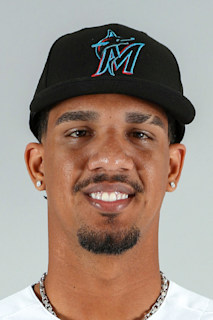
Eury Pérez
RIGHTY · MIA
The Read
Atlanta's starter: Ray Kerr is a fill-in arm who has pitched well above expectations for his role, posting the kind of surface numbers that demand attention even if the sample is limited and the tier is modest.
Miami's starter: Eury Pérez is a back-end piece in his own rotation, and his season reflects that, a losing record and an ERA that signals genuine hittability against a competitive lineup.
The lineups: Atlanta has been a solid unit against right-handed pitching across the full season, but the Braves have cooled noticeably against that hand over the last few weeks, dropping toward the bottom of the league. Miami has been a below-average group against lefties on the season, but the Marlins have quietly been one of the hotter lineups against southpaws over the last twenty games, which is the more relevant window.
Overall: The mound edge belongs to Kerr on paper, a fill-in who has outperformed his role against a back-end arm who has struggled to stay afloat this year. The wrinkle is that Miami's lineup has turned a real corner against left-handed pitching lately, making Kerr's assignment trickier than his numbers suggest. Pérez enters against an Atlanta offense that has been fading against right-handers, which softens the gap between the two starters and keeps this matchup from being a clean lean on the Atlanta side.
Team Conditions
Bullpen health, schedule rest, and the current injury list.
ATLMIA
Bullpen
3.41 ERA
(3rd of 30)
4.14 ERA
(18th of 30)
Closer pitched recently but should be OK.
Closer is rested and ready.
One setup reliever may be limited tonight.
Setup relievers are rested and ready.
Middle relief arms are fresh.
Manager is leaning on middle relief more than usual.
Long reliever pitched recently but has had a day to recover.
Long reliever pitched recently but has had a day to recover.
Rest
Had a rest day before this trip.
Had a rest day before this trip.
No major travel concerns.
No major travel concerns.
InjuryKey Players
R. Suarez (RP) - SEP 18
R. Lopez (RP) - SEP 15
J. Jimenez (RP) - SEP 15
L. Thomas (LF) - SEP 11
B. Elder (SP) - SEP 9
S. Strider (SP) - AUG 28
S. Schwellenbach (SP) - AUG 28
J. Wentz (RP) - MAY 8
A. Bender (RP) - SEP 18
P. Fairbanks (RP) - SEP 18
M. Meyer (SP) - SEP 15
O. Caissie (RF) - SEP 13
A. Nardi (RP) - AUG 24
W. Kempner (RP) - AUG 21
R. Snelling (SP) - AUG 7
A. Mazur (SP) - AUG 7
R. Henriquez (RP) - JUL 17
The Read
Atlanta's bullpen: One of the sharpest relief corps in the league, though the closer has some recent work on his arm and one setup arm may not be fully available tonight. Middle relief is fresh and capable of eating innings.
Miami's bullpen: A below-average unit by league standards, and the manager has been leaning on middle relief more heavily than normal lately, which is a mild concern for depth and fatigue heading into tonight.
Rest: Both clubs are on equal footing here. Each had a rest day before this series and neither is dealing with a difficult travel schedule, so rest and fatigue are not a factor in either direction.
Injuries: Atlanta is carrying a heavier load, with Lopez (bullpen), Thomas (left field), Elder, Strider, and Schwellenbach (all rotation) all sidelined as key contributors. Miami is also hurting, losing Fairbanks (a key late-inning arm) and Meyer (rotation) as the names that matter most, plus Caissie in the outfield.
Overall: Bullpen quality clearly favors Atlanta, whose relief unit is among the elite in the league while Miami's is well below average and already showing signs of middle relief strain. The injury picture complicates Atlanta's edge a bit given how many key rotation and position pieces are out, but Miami losing Fairbanks from their late bullpen and operating a thin relief corps in general makes their pitching situation the more vulnerable one tonight. Conditions lean Atlanta, with the bullpen gap as the sharper edge.
Weather and Ballpark
Game-time conditions and how this park actually plays.
86°F
loanDepot park
Open Air
Ballpark: Strong Pitcher-Friendly (28th of 30 in Runs)
Temperature: Warm air adds carry (~3 ft on fly balls) — Favors Hitters
Wind: 12mph Blowing In → Pitcher Advantage
The Read
Ballpark: loanDepot Park ranks among the stingiest run-scoring environments in baseball, consistently suppressing totals regardless of the matchup. With the roof open tonight, the park's built-in suppression gets reinforced by whatever the outside conditions bring.
Weather: Warm air gives fly balls a touch more carry, which nudges conditions slightly toward hitters, but the wind blowing in off the outfield fights that effect and hands pitchers the bigger edge overall. The wind wins that tug of war tonight.
Overall: A deep pitcher-friendly park paired with inbound wind creates a clear lean toward the under, and neither of these offenses is well-suited to overcome that environment. Atlanta carries notably more power and slugging threat than Miami, so if runs do materialize, the visiting lineup is better equipped to find them, but even Atlanta figures to find scoring harder than usual here. Conditions are not neutral; they tilt this game lower.
Side Write-Up
Atlanta's edge starts at the pitching staff level and compounds from there. Their rotation ranks near the top of the league in runs allowed and ERA, backed by one of the cleaner defensive units in baseball, while Miami fields one of the shakiest gloves in the sport, which amplifies whatever contact their pitchers do allow. Eury Pérez brings a losing record and a genuinely hittable ERA into tonight against a lineup built to do damage in bunches, and Miami's defensive floor means Atlanta does not need to square up every pitch to manufacture crooked numbers. Atlanta's bullpen is one of the sharpest relief corps in the league, and even with the closer carrying some recent arm workload and one setup arm uncertain, the middle relief is fresh and capable of eating innings cleanly. Miami's unit is well below average by league standards and the manager has already been leaning heavily on middle relief, so depth and freshness are real concerns as the game gets deep. The strongest counterargument is that Miami's lineup has quietly been one of the hotter groups against left-handed pitching over the last twenty games, which makes Kerr's assignment genuinely trickier than his surface numbers suggest. But Pérez's hittability, Miami's fielding liability, and the bullpen gap all tilt the same direction, and that combination is the actual weight behind this lean.
Final PickAtlanta
Total Write-Up
The case for the over runs through the two starters and what happens behind them. Pérez has been hittable all season, and Atlanta's lineup, though it has cooled against right-handed pitching in recent weeks, is still built around hard contact and power that can turn a mediocre start into a high-scoring frame quickly, especially against a defense that ranks near the bottom of the league. Miami's contact-first approach gives them a functional floor on offense, and Kerr, while pitching above expectations for his role, is walking into a Miami lineup that has been one of the hotter groups against southpaws over the last twenty games. Neither bullpen is likely to slam the door cleanly: Atlanta's closer is carrying recent workload and a setup arm is uncertain, while Miami's relief corps is below average and already stretched thin from overuse in the middle. Two starters with real vulnerability, two bullpens with real limitations, and a Miami defense that converts routine contact into extra damage add up to a game environment where runs accumulate rather than get suppressed. The genuine counterargument is the ballpark and tonight's wind: loanDepot Park is among the most run-suppressive environments in baseball, and with the wind blowing in off the outfield, the structural edge goes to the pitchers and the park holds its lean toward lower totals. But ballpark context is supporting color on top of real matchup substance, and when two hittable starters are paired with fatigued and below-average bullpens and a defense that reliably gives innings away, the environment alone is not enough to hold the total down.
Final PickOver 7.5

Written by
Trevor Nolan
This information is for entertainment purposes only and is not any form of financial or gambling advice. Sports involve high variance therefore always be responsible and manage your risk accordingly.
All stats are publicly graded and pulled from real sportsbook accounts.
RAZORLINESMLB Record: 589 - 466MLB+$379k
NBA+$152k
NFL+$42k
Promos for Your Next Bet
Current offers for your area. Pick your region and the list updates.
Select Your Location