
Army Black Knights vs Air Force Falcons, College Basketball Picks
All stats are publicly graded and pulled from real sportsbook accounts.
Tail MotorCityAnalytics
Market Action
ARMY @ AF · Betting Splits: Money % and Ticket %
Live odds tracking
AFAF Money %AF Ticket %

OWLS INSIGHTAPI / DATA10% OFF First 3-Months
✓Betting Splits✓Real-Time Odds✓Websocket Push
Model Projection
These numbers come from a power-rating model built on the method Billy Walters lays out in his book Gambler, seeded from ESPN's own real college basketball power index.
Projected Spread
AF -0.5
Market
AF -3 (-110)
Projected Total
145.5
Market
155.5 (O -110 / U -105)
Projected Moneyline
AF -105
Market
AF -162
This projection and current market action are supplementary and do not influence the final qualitative pick and analysis of today's game.
Season stats ordered from most to least relevant. Longer bar, stronger league standing.
ARMYAF
Matchup Breakdown
Army's offense: Army scores at a below-average rate and shoots from the field among the worst in Division I, though the passing game runs at a reasonable clip for a middling offense. Free throw shooting and three-point accuracy are both below average across the country.
Air Force's offense: Air Force is one of the lowest-scoring teams in all of Division I, turns the ball over at a near-bottom rate, and shoots free throws worse than every other program in the country. The three-point percentage and assist numbers place this offense among the weakest in college basketball in the 2025-26 season.
Army's defense: Army's defense gives up points at a below-average clip and is near the very bottom of Division I in blocking shots, with modest rebounding and steal numbers that offer little resistance.
Air Force's defense: Air Force concedes more points per game than the vast majority of Division I programs, rebounds poorly on the defensive end, and generates few turnovers, making it one of the more porous defenses at this level in the 2025-26 season.
Overall: Army has the clearer offensive edge, scoring at a noticeably higher rate and protecting the ball better than Air Force, whose turnover problems and near-historic free throw struggles make it difficult to generate consistent offense. Air Force's defense cannot compensate for those offensive liabilities, as it allows more points than most programs in Division I. Army's offensive production, modest as it is by national standards, should be enough to push scoring totals higher than Air Force can match.
Scorer Matchup
Each team's real detected leading scorer, and how he has actually played.

Ryan Curry
G · ARMY
2025-26 season numbers
Kam Sanders
G · AF
2025-26 season numbers
The Read
Army's leading scorer: Ryan Curry has been Army's primary offensive engine in the 2025-26 season, a guard-type who creates for himself and others and gets to the free throw line at a solid clip.
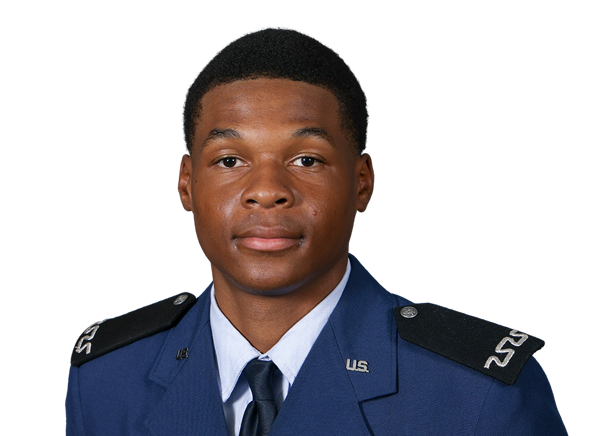
Air Force's leading scorer: Kam Sanders has filled a scoring role for Air Force in the 2025-26 season, contributing in a supporting capacity rather than operating as a true first option.
The efficiency: Neither scorer has shot the ball particularly well from the field in the 2025-26 season, but Curry earns more from the free throw line while Sanders has a slight edge from three. Curry's greater willingness to draw contact and convert there gives him a small but real scoring advantage over a full game.
Overall: Curry holds the cleaner edge between these two lead scorers, carrying a slightly higher scoring average and a more reliable path to points through foul drawing. Sanders is a capable contributor but projects more as a complementary piece than a true scoring anchor. The gap is narrow enough that neither team carries a commanding individual advantage, but Curry's production has been the more consistent of the two across the 2025-26 season.
Team Conditions
Schedule rest, recent form, and the current injury report.
ARMYAF
Rest
4 days since the last game, real extra rest.
4 days since the last game, real extra rest.
Form
2025-26 record 11-21 (home 6-10, road 5-10)
2025-26 record 3-29 (home 3-15, road 0-12)
InjuryKey Players
None reported
None reported
The Read
Army's availability: The injury report is quiet, with no meaningful absences to account for.
Air Force's availability: The injury report is quiet as well, so both teams are working with full rosters.
Rest and form: Both teams come in on equal footing in terms of rest. Army has been uneven in the 2025-26 season, alternating wins and losses recently, while Air Force has strung together three straight wins to close out their recent stretch after a rough patch earlier in the run.
Overall: Air Force enters in noticeably better form, having won three consecutive games to end their recent run, while Army has dropped more than they have won lately. Army carries a stronger overall record in the 2025-26 season, but Air Force's current momentum stands as the clearest difference between these two teams heading in.
Side Write-Up
Army covers the +4 spread because the formula found Army holding the clearer offensive edge in a matchup where Air Force's production is among the weakest in Division I. Air Force turns the ball over at a near-bottom rate but shoots free throws worse than every other program in the country and generates offense from a scoring corps built around complementary pieces rather than a true first option, which caps their ceiling game after game. Army's Ryan Curry gives them the more reliable individual scoring engine, drawing fouls and converting at the line in a way that Kam Sanders simply does not replicate, and that path to points matters when both teams shoot the ball poorly from the field. Air Force's defense allows more points than the vast majority of Division I programs and rebounds poorly on that end, so Army's offense does not need to be efficient to grind out enough possession-by-possession production. The strongest counterargument is Air Force's current form, having won three straight games heading into the 2025-26 season neutral-site meeting while Army has been alternating wins and losses, and that momentum gap is real. The overall body of work tips the other way though, because Army carries a stronger record across the 2025-26 season and Air Force's offensive infrastructure is too fragile to sustain a winning margin against a healthier Army roster playing with no key absences. Getting Army at +4 means the formula only needs them to stay within a small window, and the structural case built from scoring rates, free throw dependence, and defensive porosity on Air Force's side makes that a winnable position.
Final PickArmy Black Knights +4
Total Write-Up
The Under is the natural destination when both offenses land in the bottom tier of Division I scoring and neither defense provides a reason to expect a high-scoring environment. Air Force is one of the lowest-scoring teams in all of college basketball in the 2025-26 season, shooting free throws worse than every other program in the country and posting three-point and assist numbers that place the offense among the weakest at this level. Army scores at a below-average rate by national standards and shoots from the field among the worst in Division I, so the aggregate offensive output from both sides starts at a low baseline before a single possession is played. The arena at UTSA Convocation Center is a controlled indoor environment that removes any external variable that might push scoring in either direction, leaving the total entirely in the hands of these two offenses and their structural limitations. Neither lead scorer projects as a volume producer capable of single-handedly inflating the number, with Curry and Sanders both shooting below their potential from the field across the 2025-26 season and no secondary offensive anchor identified in the matchup breakdown. The legitimate counterargument is Air Force's three-game winning streak, suggesting the offense may be clicking at a higher level than the season-long numbers capture. Season-long rates across a full body of work carry more predictive weight than a short recent run, and when both teams rank near the bottom of Division I in scoring output, the structural evidence for a low-scoring game outweighs a brief stretch of form.
Final PickUnder 155.5

Written by
Trevor Nolan
This information is for entertainment purposes only and is not any form of financial or gambling advice. Sports involve high variance therefore always be responsible and manage your risk accordingly.
All stats are publicly graded and pulled from real sportsbook accounts.
Tail MotorCityAnalyticsOther Games Today
 NCAABToday's Top Picks, Ranked›NCAAB
 VS
 UConn Huskies vs Duke Blue Devils7:00 PM ET›NCAAB
 VS
 Virginia Cavaliers vs Marquette Golden Eagles12:00 PM ET›NCAAB
 VS
 South Carolina Gamecocks vs USC Trojans4:30 PM ET›NCAAB
 VS
 Southern Jaguars vs Nebraska Cornhuskers5:00 PM ET›NCAAB
 VS
 Arizona State Sun Devils vs LSU Tigers2:00 PM ET›NCAAB
 VS
 Texas A&M Aggies vs Xavier Musketeers2:30 PM ET›NCAAB
 VS
 SMU Mustangs vs Utah State Aggies7:00 PM ET›NCAAB
 VS
 Wake Forest Demon Deacons vs Mississippi State Bulldogs7:30 PM ET›NCAAB
 VS
 Memphis Tigers vs Penn State Nittany Lions5:00 PM ET›NCAAB
 VS
 Northeastern Huskies vs Wisconsin Badgers7:00 PM ET›NCAAB
 VS
 Yale Bulldogs vs Wright State Raiders12:30 PM ET›NCAAB
 VS
 Jackson State Tigers vs Oklahoma State Cowboys3:00 PM ET›NCAAB
 VS
 Akron Zips vs App State Mountaineers3:00 PM ET›NCAAB
 VS
 Liberty Flames vs Princeton Tigers4:00 PM ET›NCAAB
 VS
 St. Bonaventure Bonnies vs Belmont Bruins10:00 AM ET›NCAAB
 VS
 Longwood Lancers vs George Mason Patriots7:00 PM ET›NCAAB
 VS
 Eastern Washington Eagles vs Loyola Marymount Lions9:00 PM ET›NCAAB
 VS
 Norfolk State Spartans vs NC State Wolfpack7:00 PM ET›NCAAB
 VS
 Bethune-Cookman Wildcats vs Richmond Spiders6:00 PM ET›NCAAB
 VS
 St. Thomas Tommies vs UNC Wilmington Seahawks7:00 PM ET›NCAAB
 VS
 Tulane Green Wave vs Davidson Wildcats1:30 PM ET›NCAAB
 VS
 Northern Iowa Panthers vs Charlotte 49ers11:00 AM ET›NCAAB
 VS
 Eastern Kentucky Colonels vs Miami (OH) RedHawks1:00 PM ET›NCAAB
 VS
 UAlbany Great Danes vs Syracuse Orange6:00 PM ET›NCAAB
 VS
 Rice Owls vs Ohio Bobcats11:00 AM ET›NCAAB
 VS
 Pacific Tigers vs Jacksonville State Gamecocks10:30 PM ET›NCAAB
 VS
 Mississippi Valley State Delta Devils vs New Mexico Lobos12:00 AM ET›NCAAB
 VS
 Portland State Vikings vs UC Riverside Highlanders5:00 PM ET›NCAAB
 VS
 Arkansas State Red Wolves vs Florida International Panthers3:30 PM ET›NCAAB
 VS
 Georgia State Panthers vs Florida Gulf Coast Eagles4:00 PM ET›NCAAB
 VS
 Southern Utah Thunderbirds vs Long Beach State Beach1:00 PM ET›NCAAB
 VS
 Lindenwood Lions vs Stony Brook Seawolves1:00 PM ET›NCAAB
 VS
 Abilene Christian Wildcats vs South Dakota State Jackrabbits2:00 PM ET›NCAAB
 VS
 Saint Peter's Peacocks vs Columbia Lions2:00 PM ET›NCAAB
 VS
 Manhattan Jaspers vs NJIT Highlanders2:00 PM ET›NCAAB
 VS
 Arkansas-Pine Bluff Golden Lions vs South Dakota Coyotes2:00 PM ET›NCAAB
 VS
 Prairie View A&M Panthers vs Marshall Thundering Herd4:00 PM ET›NCAAB
 VS
 Alcorn State Braves vs Texas State Bobcats5:00 PM ET›NCAAB
 VS
 Grambling Tigers vs LSU New Orleans Privateers4:00 PM ET›NCAAB
 VS
 Holy Cross Crusaders vs Dartmouth Big Green5:00 PM ET›NCAAB
 VS
 Cal State Northridge Matadors vs Weber State Wildcats6:00 PM ET›NCAAB
 VS
 Northern Illinois Huskies vs SIU Edwardsville Cougars7:00 PM ET›NCAAB
 VS
 West Florida Argonauts vs Northwestern State Demons6:00 PM ET›NCAAB
 VS
 Bellarmine Knights vs Northern Kentucky Norse7:00 PM ET›NCAAB
 VS
 South Carolina Upstate Spartans vs The Citadel Bulldogs7:00 PM ET›NCAAB
 VS
 Cal State Bakersfield Roadrunners vs Pepperdine Waves8:00 PM ET›NCAAB
 VS
 Omaha Mavericks vs UC Davis Aggies8:00 PM ET›NCAAB
 VS
 Incarnate Word Cardinals vs Hawai'i Rainbow Warriors11:59 PM ET›
Promos for Your Next Bet
Current offers for your area. Pick your region and the list updates.
Select Your Location