
Omaha Mavericks vs Utah State Aggies, College Basketball Picks


All stats are publicly graded and pulled from real sportsbook accounts.
Tail MotorCityAnalytics
Model Projection
These numbers come from a power-rating model built on the method Billy Walters lays out in his book Gambler, seeded from ESPN's own real college basketball power index.
Projected Spread
USU -16
No real live market line available yet.
Projected Total
152.5
No real live market line available yet.
Projected Moneyline
USU -1270
No real live market line available yet.
This projection and current market action are supplementary and do not influence the final qualitative pick and analysis of today's game.
Season stats ordered from most to least relevant. Longer bar, stronger league standing.
OMAUSU
Matchup Breakdown
Omaha's offense: Omaha scores at a below-average rate for Division I, sitting in the lower half of the country in points per game. Their shooting efficiency and ball movement are middling at best, and they create fewer assists than most teams at this level.
Utah State's offense: Utah State is among the most efficient offensive teams in Division I in the 2025-26 season, ranking near the very top of the country in field goal percentage and assists. They score at a high clip and take care of the ball reasonably well, making them a genuinely dangerous offensive unit.
Utah State's defense: Utah State's defense is a real strength, holding opponents to fewer points than most Division I programs and generating steals at one of the highest rates in the country. Their ability to force turnovers through ball pressure gives them a meaningful edge.
Omaha's defense: Omaha's defense struggles to hold opponents down, allowing points at a below-average rate among Division I teams. They generate very few steals and blocks, meaning they offer little resistance to teams that move the ball and attack the basket.
Overall: Utah State has a more complete profile on both sides of the ball, with an offense that operates near the top of Division I and a defense that actively creates chaos through steals. The clearest collision in this matchup is Utah State's sharply efficient offense running into an Omaha defense that ranks among the weaker units in the country at forcing stops or disrupting ball-handlers.
Scorer Matchup
Each team's real detected leading scorer, and how he has actually played.

Grant Stubblefield
G · OMA
2025-26 season numbers
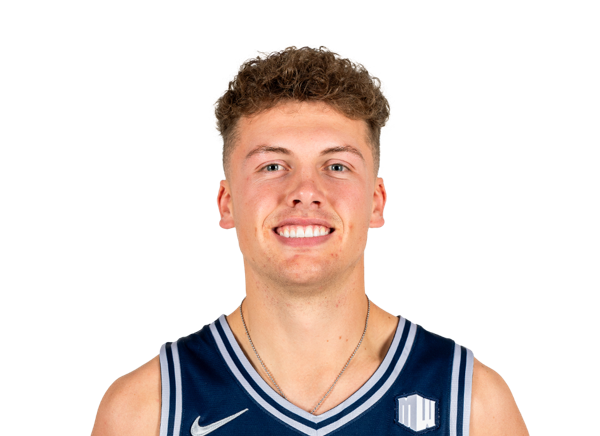
Mason Falslev
G · USU
2025-26 season numbers
The Read
Omaha's leading scorer: Grant Stubblefield functions more as a secondary piece than a primary offensive engine in the 2025-26 season, contributing across multiple areas without dominating any single one. He is a facilitator type who shoots efficiently from the field but has not established himself as a consistent threat from deep.
Utah State's leading scorer: Mason Falslev has been a genuine focal point for Utah State in the 2025-26 season, producing at a level that places him clearly above the role-player tier. He adds rebounding value for a guard or wing, hits threes at a strong clip, and gets to the line at a reasonable rate.
The efficiency: Both players convert at nearly identical rates from the field, which is the one area where the gap closes. The real separation comes from volume and shot creation: Falslev does it as the primary option against focused defensive attention, while Stubblefield reaches his efficiency in a lower-leverage role.
Overall: Falslev holds the clear edge as the more dangerous and reliable individual scorer in this matchup, and that gap matters because Utah State can run offense through him in ways Omaha cannot replicate through Stubblefield. If defenses need to account for a primary threat, Utah State has one and Omaha does not at the same level. The scorer matchup favors the home side.
Team Conditions
Schedule rest, recent form, and the current injury report.
OMAUSU
Rest
Playing on a genuine back to back, no rest since the last game.
4 days since the last game, real extra rest.
Form
2025-26 record 16-17 (home 10-4, road 5-10)
2025-26 record 29-7 (home 14-1, road 7-5)
InjuryKey Players
None reported
None reported
The Read
Omaha's availability: The injury report is quiet for Omaha, with no notable absences heading into the game.
Utah State's availability: Utah State is similarly clean on the injury front, with no meaningful personnel concerns to account for.
Rest and form: Omaha is coming in on a back-to-back with no recovery time between games, while Utah State has had several days to prepare, a meaningful gap in readiness. Omaha's recent results in the 2025-26 season have been inconsistent, leaning toward losses, while Utah State arrives off a strong stretch that carried them deep into the postseason.
Overall: Utah State enters in a considerably stronger position on both counts, better rested and coming off a run of competitive wins against quality opponents. Omaha's fatigue from consecutive games is a real disadvantage, compounded by a recent record in the 2025-26 season that shows more losses than wins away from home. The conditions clearly favor the Aggies on paper.
Side Write-Up
Utah State covers here on the strength of a matchup that breaks almost entirely in their favor. Their offense ranks near the very top of Division I in field goal percentage and assists in the 2025-26 season, and it runs into an Omaha defense that generates almost no steals or blocks and allows points at a below-average rate among Division I programs. Mason Falslev gives Utah State a genuine primary scoring option who hits threes, gets to the line, and produces under defensive attention, while Grant Stubblefield operates as a lower-leverage facilitator who has not established himself as a consistent threat from deep. The rest advantage compounds this considerably: Omaha arrives on a back-to-back with no recovery time, while Utah State has had several days to prepare coming off a strong stretch in the 2025-26 season. Omaha's road record in the 2025-26 season leans toward losses, and fatigue on consecutive nights away from home only makes that tendency more pronounced. The strongest counterargument is that both leading scorers convert at nearly identical rates from the field, which suggests the individual matchup is closer than it looks, but that parity disappears once volume and shot creation are factored in, with Falslev doing it as the primary option against real defensive focus. Utah State's defense adds a further layer, generating steals at one of the highest rates in the country and applying the kind of ball pressure that compounds the decision-making strain Omaha will already face on tired legs.
Final PickUtah State Aggies
Total Write-Up
The Under is supported by the structural conditions of this matchup rather than any single dominant factor. Utah State's defense holds opponents to fewer points than most Division I programs in the 2025-26 season and creates turnovers at an elite rate through ball pressure, which is exactly the kind of disruptive scheme that shortens possessions and limits clean looks for an offense like Omaha's. Omaha's offense sits in the lower half of Division I in scoring, with middling shooting efficiency and fewer assists than most teams at this level, meaning they are not a unit that punishes defensive pressure or manufactures points in volume. The fatigue variable matters here too: Omaha is on a back-to-back, and tired offenses on the road against a high-steal defense tend to generate more turnovers and fewer quality attempts per possession. The indoor arena at Dee Glen Smith Spectrum in Logan removes any environmental variable, so nothing breaks toward a higher-scoring environment from outside the game itself. The strongest counterargument is that Utah State's offense is genuinely dangerous, ranking near the top of Division I in efficiency in the 2025-26 season, and a one-sided offensive blowout can push a total over even if one team struggles. That concern loses weight because Utah State's defensive profile and Omaha's offensive limitations create a ceiling on what Omaha can contribute to the combined score, and a game where one team's offense functions while the other's is suppressed still tends to stay under a number that prices in two functional offenses.
Final PickUnder

Written by
VIMB
47,000+
Followers Across All Socials
17+
Brand Partners
3+
Years Experience
1,000+
Games Tested
This information is for entertainment purposes only and is not any form of financial or gambling advice. Sports involve high variance therefore always be responsible and manage your risk accordingly.
All stats are publicly graded and pulled from real sportsbook accounts.
Tail MotorCityAnalyticsTools
Loading tools…
Other Games Today





Free Promos for Your Next Bet!
Current offers for your area. Pick your region and the list updates.
Select Your Location