
Virginia Tech Hokies vs SMU Mustangs, NCAAF Picks


All stats are publicly graded and pulled from real sportsbook accounts.
 GreekOracleNCAAF Record: 158 - 83
Tennis+$26k
NCAAF+$25k
Soccer+$14k
Market Action
VT @ SMU
Live odds tracking
SMU

OWLS INSIGHTAPI / DATA10% OFF First 3-Months
✓Betting Splits✓Real-Time Odds✓Websocket Push
Model Projection
These numbers come from a power-rating model built on the method Billy Walters lays out in his book Gambler.
Projected Spread
SMU -8.5
Market
SMU -7.5 (-110)
Projected Total
56.5
Market
57.5 (O -110 / U -110)
Projected Moneyline
SMU -220
Market
SMU -278
This projection and current market action are supplementary and do not influence the final qualitative pick and analysis of today's game.
Season stats ordered from most to least relevant. Longer bar, stronger national standing.
VTSMU
Matchup Breakdown
Virginia Tech's offense: A capable unit in the 2026 season with a passing game that ranks among the better aerial attacks in the country, though the run game sits well below the national average and per-play efficiency lands right around the middle of FBS. The offense scores at a solid pace but has room to improve on third-down conversions.
SMU's offense: Among the most prolific offenses in the country in the 2026 season, with a passing attack that ranks among the very best nationally and per-play efficiency near the top of all FBS teams. They convert third downs at a strong clip and rank among the higher-scoring offenses in college football.
Virginia Tech's defense: One of the most disruptive front sevens in the country in the 2026 season, leading all of FBS in tackles for loss and ranking among the very best nationally in sacks, with run defense that is among the best in college football. The pass coverage behind that front is a genuine vulnerability, ranking well below the national midpoint, and the defense finishes near the very bottom of FBS in turnovers generated.
SMU's defense: A well-rounded unit in the 2026 season with pass coverage that ranks among the better groups nationally, above-average pressure, and a much stronger turnover rate than Virginia Tech. There are no glaring holes, making them a difficult matchup from front to back.
Overall: SMU holds the edge as the more complete team in the 2026 season. Their passing offense, one of the best in the country, runs directly into Virginia Tech's most exposed area on defense, and SMU's own pass coverage is strong enough to keep Virginia Tech's aerial attack from fully exploiting their one clear advantage. Virginia Tech's disruptive front and excellent run defense give them a real path to staying in this game, but the structural mismatch through the air runs clearly in SMU's favor.
Quarterback Matchup
The two starters, and how each has actually played.
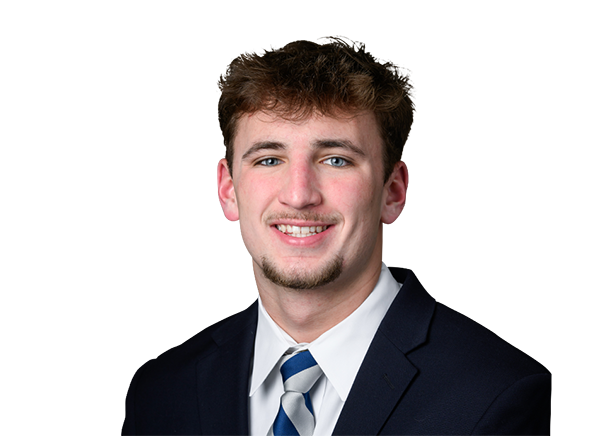
Ethan Grunkemeyer
QB #17 · VT
2026 season numbers
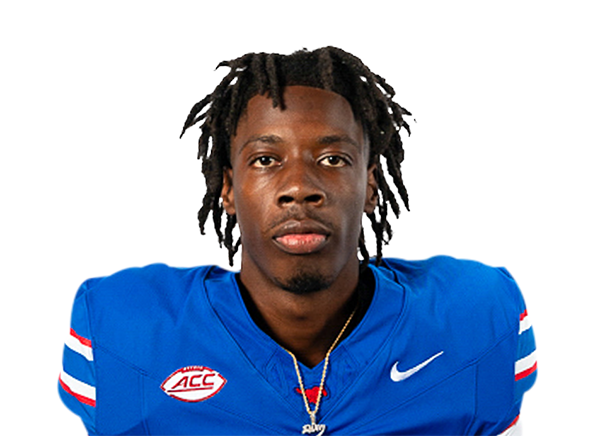
Kevin Jennings
QB #7 · SMU
2026 season numbers
The Read
Virginia Tech's quarterback: Grunkemeyer has been accurate and careful with the football in the 2026 season, completing passes at a high rate while turning the ball over rarely. His efficiency markers are strong, but his production profile points to a conservative, game-managing style rather than a high-upside downfield threat.
SMU's quarterback: Jennings has paired similarly high accuracy with a meaningfully deeper average per throw in the 2026 season, making him the more dangerous operator when targeting the second and third levels. He has thrown interceptions more freely than Grunkemeyer, but his overall production profile runs higher across every major category.
The protection: Grunkemeyer has been brought down by pass rushers far more often than Jennings in the 2026 season, which puts a hard ceiling on what the Virginia Tech offense can realistically attempt. Jennings has been kept clean at a substantially better rate, giving him the time and comfort to push the ball downfield consistently.
Overall: Jennings holds the clear edge under center heading into this matchup. He is the more explosive passer per attempt, more productive overall in the 2026 season, and operates behind protection that has kept him upright at a rate Grunkemeyer has not come close to. Grunkemeyer is efficient enough to sustain drives, but the sack disparity between the two offensive lines is a structural disadvantage that compounds Virginia Tech's challenge on the road.
Team Conditions
Schedule rest, recent form, and the current injury report.
VTSMU
Rest
Coming off a bye, 13 days between games.
Standard week of preparation, 6 days rest.
Form
2026 record 6-2 (home 3-1, road 3-1)
2026 record 6-1 (home 5-0, road 1-1)
InjuryKey Players
S. Peterkin (WR) · Out - Foot
B. Davis (RB) · Out - Undisclosed
T. Heath (WR) · Out - Undisclosed
B. Meadows (OG) · Questionable - Undisclosed
K. Altuner (OG) · Questionable - Undisclosed
M. Cunningham (OG) · Questionable - Undisclosed
L. Stuewe (WR) · Out - Undisclosed
T. Polley Jr. (S) · Out - Pectoral
M. Uter (TE) · Questionable - Undisclosed
N. Reed (K) · Questionable - Undisclosed
C. Reed (WR) · Questionable - Undisclosed
D. Green (RB) · Out - Hand
I. Singleton IV (DL) · Out - Undisclosed
L. Rhodes (RB) · Out - Knee
The Read
Virginia Tech's availability: Three receivers are ruled out, thinning the wideout depth, but the more notable concern is the entire starting interior guard group carrying questionable designations, leaving the offensive line in uncertain shape for a road game. A running back is also unavailable.
SMU's availability: Both primary running backs, Green and Rhodes, are ruled out, leaving the backfield notably shorthanded. A defensive lineman and a safety are also unavailable, and the kicker's questionable status introduces a mild special-teams element.
Rest and form: Virginia Tech arrives with a meaningful rest advantage after a bye, while SMU plays on a standard week. In the 2026 season, SMU has played the more consistent football, building a longer active winning streak and going unbeaten at home, while Virginia Tech needed a recovery stretch after back-to-back losses earlier in the year before finding form again.
Overall: SMU enters this game with cleaner momentum and the advantage of an unblemished home record in the 2026 season, which matters against a Virginia Tech side traveling on extra rest but with offensive line health uncertain. SMU's backfield depth issue is genuine, yet the Mustangs are in the more settled position overall, pairing better recent form with consistent home field success. Virginia Tech's rest edge is meaningful, but the injury conditions across both rosters tilt slightly toward SMU heading into this matchup.
Weather & Stadium
Game-time conditions and whether they actually matter here.
75°F
Gerald J. Ford Stadium
Open Air
Roof: Open air, conditions are in play
Temperature: 75°F, comfortable football weather, no effect on the passing game
Wind: 5mph, light enough to leave the passing and kicking game alone
Precipitation: 0% chance, conditions should stay dry
The Read
The stadium: Gerald J. Ford Stadium is an open-air venue in Dallas, meaning atmospheric conditions are fully in play. The forecast, however, offers nothing to work with.
The conditions: Comfortable temperatures, nearly no wind, and no precipitation combine to produce a weather-neutral environment. The passing game and kicking game face no atmospheric resistance for either Virginia Tech or SMU.
Overall: Nothing in this forecast nudges the total up or down, and neither team gains or loses anything from the conditions. SMU's home-field passing attack and Virginia Tech's road offense both operate without interference from the elements. Any expectations built on what these programs showed in the 2026 season hold their full weight here.
Side Write-Up
SMU covers at -7.5 because the structural mismatch through the air runs so clearly in their favor that the rest of the ledger cannot close it. Jennings is the more productive quarterback in the 2026 season by every major measure, pushes the ball deeper per attempt, and operates behind protection that has kept him clean at a rate Grunkemeyer has not come close to matching. That sack disparity compounds Virginia Tech's challenges on the road, because a quarterback who gets brought down at a high rate cannot realistically attempt the kinds of throws needed to stay competitive with one of the top-scoring offenses in college football. SMU's passing attack, ranked among the very best nationally in the 2026 season, lands directly against Virginia Tech's genuine vulnerability in pass coverage, which ranks well below the midpoint of FBS. Virginia Tech's entire starting interior guard group arrives with questionable designations, three receivers are ruled out, and a running back is unavailable, leaving their offense depleted on the road against a defense with no glaring holes and strong coverage. SMU enters with an unblemished home record in the 2026 season and the longer active winning streak, while Virginia Tech was still finding form again after back-to-back losses earlier in the year. The strongest case against SMU is Virginia Tech's disruptive front seven, which leads all of FBS in tackles for loss and brings genuine sack production that could rattle Jennings, but SMU's offensive line has kept Jennings clean at a substantially better rate than Grunkemeyer has been protected, blunting the threat and preserving Jennings' ability to attack Virginia Tech's exposed secondary throughout the game.
Final PickSMU -7.5
Total Write-Up
The under at 57.5 holds because scoring suppression comes from both sides of this game, not just one. Virginia Tech's offense arrives with the entire starting interior guard group carrying questionable designations, a running back unavailable, and receiver depth thinned, all of which limits what Grunkemeyer can realistically be asked to do against a well-rounded SMU defense with no glaring holes. Grunkemeyer's profile in the 2026 season is that of a careful, game-managing quarterback rather than a downfield threat, and the sack rate he has absorbed all season puts a hard structural ceiling on the kinds of plays Virginia Tech needs to push a score into the high-side range. SMU's offense carries its own genuine limitation into this game, with both primary running backs ruled out and the attack forced into heavier reliance on the passing game against a front seven that leads all of FBS in tackles for loss and ranks among the very best nationally in sacks. When an opponent is funneled exclusively into the air by pass-rush pressure and elite run defense, Virginia Tech's secondary vulnerability becomes less decisive, because disrupted timing and backfield penetration can still suppress sustained scoring drives even when individual completions are available. SMU's defense adds another layer, with above-average pressure, strong pass coverage, and a much better turnover rate than Virginia Tech generates, which puts consistent stress on a conservative quarterback operating in an unfamiliar road environment. The strongest counterargument is that Jennings and SMU's passing offense are among the most productive in the country in the 2026 season and weather-neutral conditions remove any atmospheric drag, but Virginia Tech's front seven is the single most disruptive unit in college football by tackles for loss and that kind of consistent backfield penetration slows sustained drives regardless of quarterback quality, and the combined offensive injury toll across both rosters makes a score anywhere near that total a genuine stretch.
Final PickUnder 57.5

Written by
VIMB
47,000+
Followers Across All Socials
17+
Brand Partners
3+
Years Experience
1,000+
Games Tested
This information is for entertainment purposes only and is not any form of financial or gambling advice. Sports involve high variance therefore always be responsible and manage your risk accordingly.
All stats are publicly graded and pulled from real sportsbook accounts.
GreekOracleNCAAF Record: 158 - 83Tennis+$26k
NCAAF+$25k
Soccer+$14k
Tools
Loading tools…
Other games this week




Free Promos for Your Next Bet!
Current offers for your area. Pick your region and the list updates.
Select Your Location