
Kansas Jayhawks vs West Virginia Mountaineers, NCAAF Picks

All stats are publicly graded and pulled from real sportsbook accounts.
 GreekOracleNCAAF Record: 158 - 83
Tennis+$26k
NCAAF+$25k
Soccer+$14k
Model Projection
These numbers come from a power-rating model built on the method Billy Walters lays out in his book Gambler.
Projected Spread
WVU -6
Projected Total
60.5
Projected Moneyline
WVU -175
This projection and current market action are supplementary and do not influence the final qualitative pick and analysis of today's game.
Season stats ordered from most to least relevant. Longer bar, stronger national standing.
KUWVU
Matchup Breakdown
Kansas's offense: Kansas generates yards in volume, especially on the ground, but they come up short on third and fourth downs far more than most programs and give the ball away at a rate near the bottom of the country. The yardage production looks better than the actual scoring output suggests.
West Virginia's offense: West Virginia runs the ball as well as almost any team in the country and converts third downs at a high rate, scoring well above the national average in the 2026 season. They protect the ball considerably more reliably than Kansas and can grind out drives with consistency.
Kansas's defense: Kansas covers opposing receivers better than most programs nationally and creates turnovers at one of the higher rates in the country, which is their clearest defensive identity. The run defense is a soft spot and the pass rush is below average, but the coverage unit is a genuine strength.
West Virginia's defense: West Virginia's defense has been among the most easily exploited units in college football in the 2026 season, surrendering yards and points near the very bottom nationally. Their pass defense is about as vulnerable as any in the country, leaving opposing quarterbacks with almost no resistance to work against.
Overall: West Virginia is the more complete offensive team by a wide margin, with a dominant ground attack pointed directly at a Kansas run defense that struggles to hold up. The counter is Kansas's passing game aimed squarely at a West Virginia pass defense that ranks among the worst in the country. If Kansas can cut down on the giveaways and work through the air consistently, the matchup gets considerably tighter than West Virginia's offensive numbers alone would suggest.
Quarterback Matchup
The two starters, and how each has actually played.
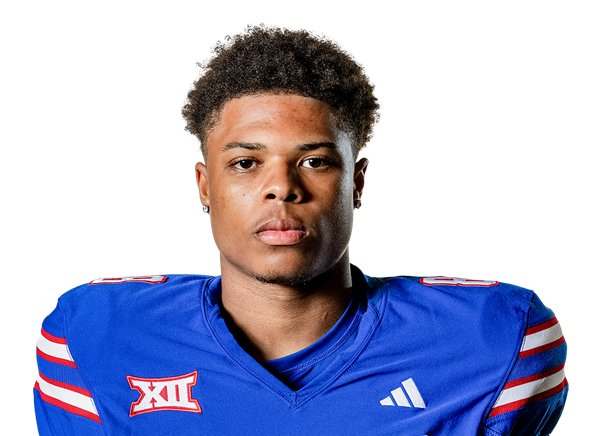
Isaiah Marshall
QB #8 · KU
2026 season numbers

Michael Hawkins Jr.
QB #3 · WVU
2026 season numbers
The Read
Kansas's quarterback: Isaiah Marshall has been a middling presence in the 2026 season, moving the ball adequately but giving it away at a rate that undermines whatever efficiency he builds. He is functional, not dangerous, and the turnover tendency is a persistent liability.
West Virginia's quarterback: Michael Hawkins Jr. has been one of the more careful and productive passers in his conference during the 2026 season, pushing the ball downfield at a strong per-attempt clip while keeping turnovers to a minimum. He does more with each possession than the raw yardage total suggests.
The protection: Marshall has faced less pressure from the pocket over the course of the 2026 season, while Hawkins has absorbed significantly more sacks. That Hawkins has maintained his accuracy, big-play rate, and turnover discipline despite the extra hits speaks to his composure under duress rather than to any line advantage.
Overall: Hawkins holds a clear edge under center, built on a commanding turnover margin and a noticeably larger average gain per throw. Marshall's ball-security issues are the kind of problem that compounds against a team with a live quarterback who can capitalize on short fields. The gap at the position is real and leans decisively toward the home side.
Team Conditions
Schedule rest, recent form, and the current injury report.
KUWVU
Rest
Standard week of preparation, 6 days rest.
Standard week of preparation, 6 days rest.
Form
2026 record 3-5 (home 3-1, road 0-3)
2026 record 5-3 (home 3-2, road 1-1)
InjuryKey Players
J. Mason (QB) · Questionable - Undisclosed
J. Butler (TE) · Questionable - Undisclosed
C. Moses (TE) · Questionable - Undisclosed
K. Kubecka (WR) · Questionable - Undisclosed
C. Ballard (QB) · Out - Shoulder
K. Amachree (RB) · Out - Undisclosed
Y. Willis (RB) · Out - Foot
J. Thurman (RB) · Out - Undisclosed
C. Talley (RB) · Questionable - Undisclosed
L. Autry (RB) · Questionable - Undisclosed
C. Ball (TE) · Out - Undisclosed
A. Devine (RB) · Out - Undisclosed
M. Boswell (RB) · Out - Undisclosed
The Read
Kansas's availability: Kansas carries a notable quarterback situation into this game, with their starter questionable and their backup ruled out entirely with a shoulder injury, leaving the position genuinely thin. The running back group is also significantly depleted, with several backs unavailable, compounding what will be a limited offensive toolbox on the road.
West Virginia's availability: West Virginia is also missing multiple running backs to injury, which thins their backfield options in a real way, but their quarterback room appears healthy and unaffected. The running back losses are worth noting but do not carry the same compounding weight as Kansas's situation.
Rest and form: Both teams came into this game off identical preparation windows, so rest is a neutral factor. West Virginia arrives on an active winning streak in the 2026 season and holds a winning overall record, while Kansas has gone winless on the road all season and enters having dropped most of their recent away outings.
Overall: West Virginia holds a clear structural advantage in this matchup, combining home field, an active winning streak, and a healthier quarterback room than their opponent. Kansas is the road team, playing through meaningful offensive personnel losses at multiple positions, and has not demonstrated the ability to win away from home in the 2026 season. The conditions point consistently toward West Virginia being in the stronger position entering this game.
Weather & Stadium
Game-time conditions and whether they actually matter here.
33°F
Milan Puskar Stadium
Open Air
Roof: Open air, conditions are in play
Temperature: 33°F, cold enough to affect grip on deep throws and the kicking game
Wind: 10mph from the NW, gusting to 21mph, a real factor on deep throws and long field goals
Precipitation: 32% chance, about 0.14 inches during the game, a wet ball costs ball security and shortens the passing game
The Read
The stadium: Milan Puskar Stadium is an open-air venue in Morgantown, so every weather variable on the board is live and in play for this game.
The conditions: Near-freezing temperatures can tighten grip and dull the kicking game, and moderate wind with meaningful gusts from the northwest adds real variance to deep throws and long field goal attempts. A genuine chance of precipitation during the game raises the likelihood of a slick ball, which tends to compress ball security and push offenses toward shorter, flatter route trees.
Overall: The combination of cold air, gusty wind and a credible precipitation window creates meaningful friction for both passing attacks, and the kicking game on both sides carries added uncertainty. West Virginia's familiarity with late-season Morgantown conditions is a mild structural edge for the home side. Taken together, the conditions offer a reasonable, if not overwhelming, lean toward the lower end of the total range.
Side Write-Up
West Virginia wins this matchup at multiple levels that compound in the same direction. Michael Hawkins Jr. has been one of the more careful and productive passers in his conference during the 2026 season, carrying a commanding edge in turnover margin and average gain per throw over Isaiah Marshall, whose ball-security issues are a persistent liability against a team with a live quarterback that can capitalize on short fields. Kansas arrives with their starting quarterback questionable and their backup ruled out entirely with a shoulder injury, leaving the position genuinely thin at the worst possible time on the road. The running back room is also significantly depleted, compounding what is already a limited offensive toolbox, and Kansas has gone winless on the road all season in the 2026 season. West Virginia's dominant ground attack is pointed directly at a Kansas run defense that struggles to hold up, and the Mountaineers convert third downs at a high rate and score well above the national average. West Virginia enters on an active winning streak with a winning overall record, adding structural momentum to what is already a favorable personnel picture. The strongest counterargument is Kansas's coverage unit, which is one of the better pass defenses in the country and creates turnovers at one of the higher rates nationally, giving them a genuine path to flipping field position and keeping Hawkins uncomfortable. That argument loses weight because the Kansas quarterback situation is too compromised to consistently execute the kind of precise downfield attack needed to take full advantage, and the turnover margin between the two programs runs in West Virginia's favor regardless.
Final PickWest Virginia
Total Write-Up
The case for the over is built on a defensive profile that creates scoring opportunities from both sides of the ball. West Virginia's defense has been among the most exploited units in college football in the 2026 season, surrendering yards and points near the very bottom nationally, and their pass defense in particular offers almost no resistance to opposing quarterbacks. Kansas's coverage unit is a genuine strength, but their pass rush is below average and their run defense is a soft spot, meaning West Virginia's dominant ground game has a clear path to consistent scoring even with a thinned backfield. Hawkins is pushing the ball downfield at a strong per-attempt clip and operating with composure despite extra pressure absorbed this season, so the Mountaineers should be able to generate points and sustain drives with or without their full complement of backs. Even a limited Kansas offense, working through personnel losses at quarterback and running back, is pointed squarely at a West Virginia secondary that offers virtually no resistance through the air, keeping their scoring ceiling alive. The strongest counterargument is the weather, with near-freezing temperatures, meaningful gusts from the northwest, and a real chance of game-time precipitation creating friction for both passing attacks and compressing an already uncertain kicking game. Those conditions carry a modest lean toward the lower end of the range, but West Virginia's defense is porous enough that it neutralizes the weather discount on Kansas's offense, and a ball-security squeeze from a slick field hurts Kansas more than West Virginia given the significant gap in turnover discipline between the two programs.
Final PickOver

Written by
VIMB
47,000+
Followers Across All Socials
17+
Brand Partners
3+
Years Experience
1,000+
Games Tested
This information is for entertainment purposes only and is not any form of financial or gambling advice. Sports involve high variance therefore always be responsible and manage your risk accordingly.
All stats are publicly graded and pulled from real sportsbook accounts.
GreekOracleNCAAF Record: 158 - 83Tennis+$26k
NCAAF+$25k
Soccer+$14k
Other games this week

 NCAAF
 VS
 Delaware Blue Hens vs Kennesaw State Owls3:00 PM ET›NCAAF
 VS
 West Virginia Mountaineers vs Texas Tech Red Raiders9:30 PM ET›NCAAF
 VS
 Merrimack Warriors vs Wake Forest Demon Deacons3:30 PM ET›NCAAF
 VS
 Miami Hurricanes vs Notre Dame Fighting Irish7:30 PM ET›NCAAF
 VS
 Rice Owls vs North Texas Mean Green4:00 PM ET›NCAAF
 VS
 Oklahoma State Cowboys vs Kansas State Wildcats1:00 PM ET›NCAAF
 VS
 Missouri State Bears vs Florida International Panthers4:00 PM ET›NCAAF
 VS
 Georgia State Panthers vs App State Mountaineers2:30 PM ET›NCAAF
 VS
 Michigan State Spartans vs Michigan Wolverines7:30 PM ET›NCAAF
 VS
 Iowa Hawkeyes vs Northwestern Wildcats7:30 PM ET›
Promos for Your Next Bet
Current offers for your area. Pick your region and the list updates.
Select Your Location