
SMU Mustangs vs Stanford Cardinal, NCAAF Picks


All stats are publicly graded and pulled from real sportsbook accounts.
 GreekOracleNCAAF Record: 158 - 83
Tennis+$26k
NCAAF+$25k
Soccer+$14k
Model Projection
These numbers come from a power-rating model built on the method Billy Walters lays out in his book Gambler.
Projected Spread
SMU -8.5
Projected Total
59
Market
60.5 (O -110 / U -110)
Projected Moneyline
SMU -230
This projection and current market action are supplementary and do not influence the final qualitative pick and analysis of today's game.
Season stats ordered from most to least relevant. Longer bar, stronger national standing.
SMUSTAN
Matchup Breakdown
SMU's offense: One of the more productive and efficient passing attacks in the country, generating yards at a rate that ranks among the best in all of FBS. SMU moves the chains consistently on third down, though they give the ball away at a rate that undercuts an otherwise strong unit.
Stanford's offense: Among the least productive offenses in the country, with a third-down conversion rate that ranks near the very bottom of all FBS programs. Stanford does not score enough to put sustained pressure on opponents, and while they protect the ball well, they simply do not do enough with possession.
SMU's defense: SMU gets into the backfield at a rate that ranks among the country's best, disrupting plays before they develop with consistent pressure and tackles for loss. The one clear gap is creating turnovers through the air, as SMU has struggled all season to generate interceptions.
Stanford's defense: Among the worst defenses in the country by almost every measure, surrendering yards and points at rates that sit near the bottom of all FBS programs. Stanford generates almost no pressure, leaving opposing offenses free to operate without disruption.
Overall: SMU's passing game, one of the better in college football, faces a Stanford pass defense that ranks near the very bottom of the country, a direct collision that should produce plenty of production for the Mustangs. Stanford's offense, meanwhile, faces a defense that specializes in stopping plays before they start, which is a terrible mismatch for a unit that already struggles to convert on third down and generate consistent scoring. The more complete matchup belongs clearly to SMU.
Quarterback Matchup
The two starters, and how each has actually played.
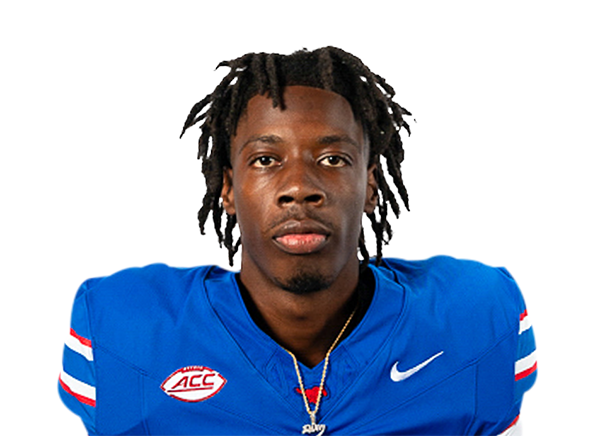
Kevin Jennings
QB #7 · SMU
2026 season numbers
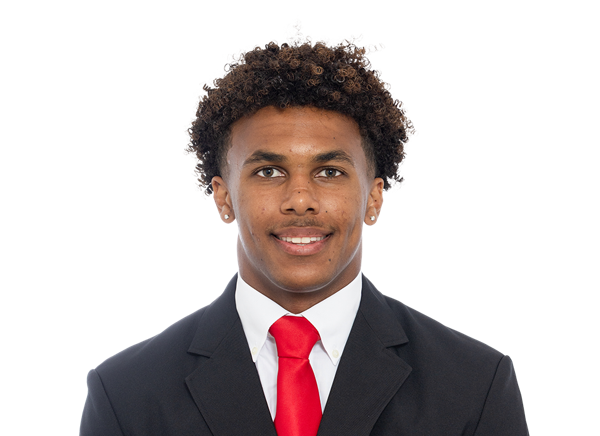
Michael Mitchell Jr.
QB #9 · STAN
2026 season numbers
The Read
SMU's quarterback: Kevin Jennings has been one of the more productive passers in the 2026 season, completing passes at a high rate while generating substantial yardage on each attempt. His touchdown volume relative to interceptions reflects a quarterback who has been both accurate and dangerous downfield.
Stanford's quarterback: Michael Mitchell Jr. has almost no passing sample in the 2026 season, with a stat line that amounts to a handful of snaps rather than a full body of work. Any read on his actual quality as a passer is speculation at this point.
The protection: Jennings has absorbed sacks at a moderate clip across his starts, which speaks to a line that holds up adequately but not exceptionally. Mitchell has been touched down nearly clean, though that figure carries no real weight given how rarely he has been asked to throw.
Overall: The gap under center is wide, with Jennings coming in as a proven, high-output passer and Mitchell arriving with virtually no meaningful tape in the 2026 season. SMU holds a clear advantage at quarterback, and that edge compounds because Stanford's starter is still an unknown quantity rather than a known commodity who is simply having a rough stretch.
Team Conditions
Schedule rest, recent form, and the current injury report.
SMUSTAN
Rest
Standard week of preparation, 6 days rest.
Standard week of preparation, 6 days rest.
Form
2026 record 7-3 (home 6-1, road 1-2)
2026 record 5-5 (home 4-1, road 1-4)
InjuryKey Players
T. Polley Jr. (S) · Out - Pectoral
M. Uter (TE) · Questionable - Undisclosed
N. Reed (K) · Questionable - Undisclosed
C. Reed (WR) · Questionable - Undisclosed
D. Green (RB) · Out - Hand
I. Singleton IV (DL) · Out - Undisclosed
L. Rhodes (RB) · Out - Knee
N. Prongos (OG) · Out - Undisclosed
L. Bironas (K) · Out - Undisclosed
D. Sharper (WR) · Questionable - Undisclosed
C. Shaw (WR) · Questionable - Undisclosed
A. Kilstrom (OG) · Questionable - Undisclosed
The Read
SMU's availability: SMU is missing multiple running backs and a defensive lineman, which noticeably thins their backfield heading into a road game. A kicker and a wide receiver are also questionable, though those carry less weight than the ground-game losses.
Stanford's availability: Stanford has offensive line concerns at guard, with a player confirmed out and another questionable alongside a third listed in doubt. Their kicker is also out, and multiple wide receivers are questionable.
Rest and form: Both teams had identical preparation coming in. SMU carries the stronger overall record in the 2026 season but has been inconsistent away from home and lost their most recent game by a wide margin. Stanford sits close to even on the season, has been considerably more reliable at home, and enters on the back of a win.
Overall: Stanford's home record in the 2026 season is a genuine strength, and SMU has not traveled well. SMU is also missing multiple running backs for this road trip, which compounds an already shaky away profile. The conditions lean toward Stanford despite SMU holding the stronger overall record in the 2026 season.
Weather & Stadium
Game-time conditions and whether they actually matter here.
57°F
Stanford Stadium
Open Air
Roof: Open air, conditions are in play
Temperature: 57°F, comfortable football weather, no effect on the passing game
Wind: 2mph, light enough to leave the passing and kicking game alone
Precipitation: 35% chance, worth checking again before kickoff
The Read
The stadium: Stanford Stadium is open air, so atmospheric conditions are always in play. The forecast at game time is mild enough that weather is a background consideration rather than a storyline.
The conditions: Temperatures are in the comfortable range for football and wind is light enough to leave both the passing and kicking games alone. The precipitation chance is real but not dominant, and absent a significant uptick before kickoff the field should play dry.
Overall: Nothing in this forecast meaningfully pressures the total up or down, and neither SMU nor Stanford faces a stylistic disadvantage from the conditions as projected. The rain probability is the one item worth a final check closer to kickoff, but even a light shower at these temperatures and wind speeds rarely produces the kind of environment that shifts how a game is played.
Side Write-Up
SMU's passing attack ranks among the best in FBS in the 2026 season and runs directly into a Stanford pass defense that sits near the very bottom of the country. Kevin Jennings is a proven, high-output passer whose touchdown volume relative to interceptions reflects both accuracy and downfield production. Stanford's starter Michael Mitchell Jr. carries almost no meaningful passing sample in the 2026 season, a stat line that amounts to a handful of snaps, so the gap under center is between a known producer and a complete unknown. SMU's defense gets into the backfield at one of the best rates in the country, and that steady disruption is a punishing match for a Stanford offense that already converts at one of the lowest third-down rates in FBS. The strongest counterargument is Stanford's genuine home advantage in the 2026 season paired with SMU's inconsistent road form and the confirmed absence of multiple running backs. That combination leans toward the home side on paper, but SMU's production in the passing game does not depend on a healthy backfield, and Stanford's coverage unit cannot slow down even a reduced version of this offense. Stanford simply cannot score enough to make home field a decisive factor when facing a defense this good at stopping drives before they start.
Final PickSMU -10
Total Write-Up
SMU's passing game is one of the more productive in college football and faces a Stanford defense that surrenders yards and points at rates near the bottom of all FBS programs, a direct collision that should produce sustained output for the Mustangs. Jennings can operate without disruption behind a line that holds up adequately, and Stanford generates almost no pass rush to change that equation. Stanford's offensive line enters the game with a guard confirmed out and two more blockers in doubt, adding pressure to an offense that already struggles to convert and score consistently. SMU's defense will disrupt Stanford's drives with backfield penetration, and while SMU has struggled all season to generate interceptions, that tendency means Stanford retains possession rather than surrendering it early, which keeps scoring chances alive on both sides. The weather forecast removes atmospheric concerns entirely, with comfortable temperatures and light enough wind to leave both the passing game and special teams alone. The strongest counterargument is that Stanford's offense is so limited it may not contribute enough scoring to push this game over the total. But SMU's ability to score freely against this coverage is essentially uncontested, and the absence of meaningful defensive pressure on Jennings from Stanford's front means that side of the ball alone carries the weight.
Final PickOver 60.5

Written by
Trevor Nolan
This information is for entertainment purposes only and is not any form of financial or gambling advice. Sports involve high variance therefore always be responsible and manage your risk accordingly.
All stats are publicly graded and pulled from real sportsbook accounts.
GreekOracleNCAAF Record: 158 - 83Tennis+$26k
NCAAF+$25k
Soccer+$14k
Other games this week
 NCAAF
 VS
 Washington State Cougars vs Texas State Bobcats6:00 PM ET›NCAAF
 VS
 Vanderbilt Commodores vs Florida Gators12:00 PM ET›NCAAF
 VS
 Delaware Blue Hens vs New Mexico State Aggies3:00 PM ET›NCAAF
 VS
 Chattanooga Mocs vs Alabama Crimson Tide2:00 PM ET›NCAAF
 VS
 UCLA Bruins vs Michigan Wolverines3:30 PM ET›NCAAF
 VS
 North Texas Mean Green vs Tulane Green Wave12:00 PM ET›NCAAF
 VS
 Georgia State Panthers vs Marshall Thundering Herd4:00 PM ET›NCAAF
 VS
 Oklahoma State Cowboys vs Arizona State Sun Devils10:15 PM ET›NCAAF
 VS
 Utah State Aggies vs Oregon State Beavers10:30 PM ET›NCAAF
 VS
 Wofford Terriers vs Ole Miss Rebels12:00 PM ET›
Promos for Your Next Bet
Current offers for your area. Pick your region and the list updates.
Select Your Location