
San Jose Sharks vs New York Rangers, NHL Picks
All stats are publicly graded and pulled from real sportsbook accounts.
 JakeMNHL Record: 297 - 207
NBA+$19k
WNBA+$11k
NFL+$7k
Model Projection
These numbers come from a power-rating model built on the method Billy Walters lays out in his book Gambler, seeded from each team's real goal differential in ESPN's NHL standings.
Projected Moneyline
NYR -175
No real live market line available yet.
Projected Total
5.9 Goals
No real live market line available yet.
This projection and current market action are supplementary and do not influence the final qualitative pick and analysis of today's game.
Season stats ordered from most to least relevant. Longer bar, stronger league standing.
SJNYR
Matchup Breakdown
Sharks' offense: San Jose is one of the least efficient scoring teams in the league, generating shots at a middling rate but converting them at one of the worst rates in the NHL. Their faceoff work falls well below average too, so they rarely get to start sequences on their own terms.
Rangers' offense: New York generates fewer shots than most teams, though they convert at a meaningfully better clip than the Sharks do. They win faceoffs at a well-above-average rate, giving them a consistent edge in possession.
Rangers' defense: The Rangers have one of the more complete defensive setups in the league, limiting shots and goals at well-above-average rates while their goaltending ranks near the very best in the NHL. Their penalty kill is the best in the league, which is a direct problem for a Sharks team that already struggles on the man advantage.
Sharks' defense: San Jose sits near the very bottom of the league in both shots and goals allowed, and their penalty kill ranks among the worst in the NHL. There is very little cushion here when the game opens up.
Overall: The Rangers carry a clear structural edge, and the place it shows up most sharply is on special teams. New York's league-best penalty kill meets a Sharks power play that sits in the bottom half of the league, and Rangers goaltending should contain a San Jose offense that converts shots at one of the worst rates in the NHL. The Sharks' porous defense gives New York plenty of room even without a dominant attack of their own.
Goalie Matchup
The two starters in net, and how each has actually played.
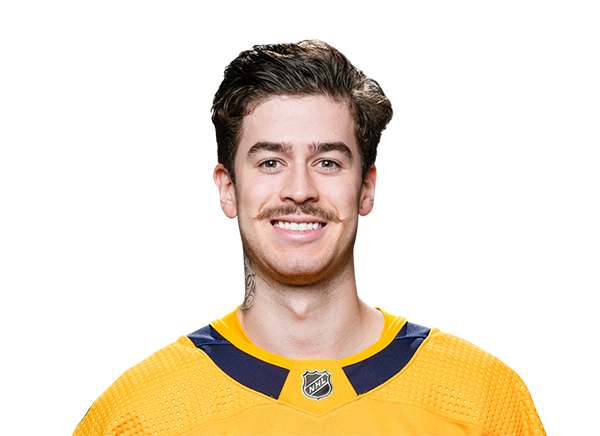
Yaroslav Askarov
G #30 · SJ
2026-27 season numbers

Dylan Garand
G #33 · NYR
2026-27 season numbers
The Read
Sharks' goalie: Askarov has been an average-tier goalie through the 2026-27 season, allowing goals at a rate that puts strain on the team ahead of him. A large body of starts with no shutouts fits the picture his numbers paint of a goalie who has been serviceable but rarely dominant.
Rangers' goalie: Garand has been a high-end starter in the 2026-27 season, holding opponents to significantly fewer goals per game and stopping a meaningfully larger share of shots. His shutout in a smaller body of work shows he has been capable of complete, clean performances.
The workload: Askarov carries the heavier sample of the two, with substantially more starts logged through the 2026-27 season, which makes his numbers a reliable read on his actual play. Garand has fewer starts but enough to treat his numbers as meaningful rather than a thin-sample artifact. Both are confirmed starters.
Overall: The gap between the two goalies reflects a real performance difference, with Garand posting numbers that place him comfortably ahead of Askarov across a genuine sample. San Jose's goaltending has been closer to league average in the 2026-27 season, while New York's has been genuinely above it, giving the Rangers a structural advantage in net entering this game.
Team Conditions
Schedule rest, recent form, and the current injury report.
SJNYR
Rest
Standard preparation, 2 days rest.
Standard preparation, 3 days rest.
Form
2026-27 record 11-14-2 (home 6-7-1, road 5-7-1)
2026-27 record 13-10-1 (home 9-3-0, road 4-7-1)
InjuryKey Players
J. Trouba (D) - NOV 23 · Out
K. Sherwood (LW) - NOV 23 · Injured Reserve
I. Chernyshov (LW) - NOV 15 · Injured Reserve
Q. Musty (LW) - NOV 15 · Injured Reserve
K. Keyser (G) - SEP 28 · Injured Reserve
P. Dorofeyev (RW) - NOV 24 · Injured Reserve
O. Bjorkstrand (RW) - NOV 21 · Injured Reserve
A. Smits (D) - NOV 21 · Injured Reserve
J. Veleno (C) - NOV 20 · Injured Reserve
I. Shesterkin (G) - OCT 11 · Injured Reserve
The Read
Sharks' availability: San Jose is missing several left wingers and a defenseman, leaving both the forward depth and the blue line thinner than usual. Goaltending depth has also been reduced for a good stretch of the 2026-27 season.
Rangers' availability: New York has a cluster of recent absences at forward and on defense, and Igor Shesterkin has been out since fall, which carries the most weight given his role as the team's starting goalie.
Rest and form: The Rangers have a slight rest edge heading in. New York sits above the break-even mark in the 2026-27 season and has won consecutive games after back-to-back losses. San Jose is below the break-even mark in the 2026-27 season and has traded wins and losses recently without building a run in either direction.
Overall: New York is in the better spot on most counts, with a winning record in the 2026-27 season, a bit more rest, and recent momentum on their side. San Jose's depleted forward group and uneven form are real limitations. Shesterkin's absence remains the main open question for the Rangers, keeping their goaltending situation unsettled despite the stronger overall picture.
Side Write-Up
The Rangers carry a structural edge over the Sharks that shows up at every layer of the game. New York's defense limits shots and goals at well-above-average rates, their penalty kill is the best in the league, and their goaltending in the 2026-27 season has been genuinely elite, with Garand posting numbers that place him comfortably above Askarov across a real sample. San Jose's offense converts shots at one of the worst rates in the NHL, wins faceoffs below average, and now arrives with a depleted forward group and a thinned-out blue line. The Rangers win faceoffs at a well-above-average rate, so New York gets to dictate possession terms on their own ice against a Sharks team that rarely gets to start sequences on its own terms. New York has also won consecutive games after back-to-back losses and enters with more rest, while San Jose has traded wins and losses in the 2026-27 season without building any run. The strongest counterargument is Shesterkin's absence, which leaves New York's goaltending situation unsettled despite Garand's strong 2026-27 numbers. That concern is real, but it is weighed against a Sharks offense that is already one of the least efficient in the league at converting chances, which limits how much damage an average goalie performance actually invites.
Final PickNew York Rangers
Total Write-Up
Every structural factor in this game points toward a low-scoring result. San Jose converts shots at one of the worst rates in the NHL and enters with missing forwards reducing their offensive depth, while Garand has been capable of complete, clean performances in the 2026-27 season and faces an attack that rarely makes goalies pay. The Rangers limit shots and goals at well-above-average rates on their own side, and their penalty kill being the best in the league directly neutralizes the main situation where the Sharks might find extra offense. San Jose's penalty kill ranks among the worst in the NHL, so if New York draws power plays, they face a defense that offers very little resistance, but the Rangers themselves generate fewer shots than most teams, keeping their own offensive ceiling moderate. Both offenses have reasons to stay quiet: the Sharks because of conversion rate and roster losses, the Rangers because of shot volume that relies on efficiency rather than volume to produce. The clearest counterargument is that San Jose's poor defense could allow the Rangers to score freely and push the total up on their own. That risk is real, but New York's attack is not built on overwhelming shot generation, and Askarov carrying a large body of starts in the 2026-27 season at an average tier means he has shown enough to prevent blowouts even when the defense leaks.
Final PickUnder

Written by
Trevor Nolan
This information is for entertainment purposes only and is not any form of financial or gambling advice. Sports involve high variance therefore always be responsible and manage your risk accordingly.
All stats are publicly graded and pulled from real sportsbook accounts.
JakeMNHL Record: 297 - 207NBA+$19k
WNBA+$11k
NFL+$7k
Other Games Today

 NHLToday's Top Picks, Ranked›NHL
 VS
 Toronto Maple Leafs vs Boston Bruins1:00 PM ET›NHL
 VS
 Calgary Flames vs New Jersey Devils1:00 PM ET›NHL
 VS
 Utah Mammoth vs Nashville Predators1:00 PM ET›NHL
 VS
 Dallas Stars vs St. Louis Blues2:00 PM ET›NHL
 VS
 Ottawa Senators vs Tampa Bay Lightning3:00 PM ET›NHL
 VS
 Vancouver Canucks vs Philadelphia Flyers3:00 PM ET›NHL
 VS
 Florida Panthers vs Washington Capitals3:00 PM ET›NHL
 VS
 Detroit Red Wings vs Columbus Blue Jackets3:00 PM ET›NHL
 VS
 Colorado Avalanche vs Minnesota Wild4:00 PM ET›NHL
 VS
 Los Angeles Kings vs Anaheim Ducks4:00 PM ET›NHL
 VS
 Vegas Golden Knights vs San Jose Sharks4:00 PM ET›NHL
 VS
 New York Rangers vs Chicago Blackhawks5:30 PM ET›NHL
 VS
 Winnipeg Jets vs New York Islanders7:30 PM ET›NHL
 VS
 Pittsburgh Penguins vs Buffalo Sabres8:00 PM ET›NHL
 VS
 Seattle Kraken vs Edmonton Oilers8:00 PM ET›
Promos for Your Next Bet
Current offers for your area. Pick your region and the list updates.
Select Your Location