
Houston Cougars vs Colorado Buffaloes, NCAAF Picks



All stats are publicly graded and pulled from real sportsbook accounts.
 GreekOracleNCAAF Record: 158 - 83
Tennis+$26k
NCAAF+$25k
Soccer+$14k
Model Projection
These numbers come from a power-rating model built on the method Billy Walters lays out in his book Gambler.
Projected Spread
HOU -13
Projected Total
53.5
Projected Moneyline
HOU -345
This projection and current market action are supplementary and do not influence the final qualitative pick and analysis of today's game.
Season stats ordered from most to least relevant. Longer bar, stronger national standing.
HOUCOLO
Matchup Breakdown
Houston's offense: One of the most productive and efficient offenses in the country in the 2026 season, Houston converts third downs at a rate better than any other FBS program and protects the ball exceptionally well. They generate big yardage totals through both the air and the ground game in roughly equal measure.
Colorado's offense: Colorado's offense has struggled to put points on the board consistently in the 2026 season, ranking near the very bottom of FBS programs in scoring. They also give the ball away at one of the worst rates nationally, which undercuts whatever yardage they manage to accumulate.
Houston's defense: Houston limits opponents' scoring at a well above average rate and runs one of the better run-stopping units in the country. Their pass coverage has been vulnerable at a level that ranks among the worst nationally, though their ability to pick off passes at a solid rate matters a great deal against an offense that turns it over constantly.
Colorado's defense: Colorado's defense creates genuine disruption, ranking among the very best nationally at making plays behind the line of scrimmage and generating takeaways at a solid rate. Despite that activity level, they still give up points and yards at a rate that falls well below the national average, so the disruption has not fully translated into limiting scoring.
Overall: Houston brings a far more complete profile into this matchup, led by one of the country's most efficient offenses going against a Colorado defense that disrupts but still bleeds points. The clearest collision on the field is Houston's exceptional ball security running into Colorado's heavy turnover habit. Houston's ability to convert third downs at will could make this game feel settled before Colorado finds its footing.
Quarterback Matchup
The two starters, and how each has actually played.
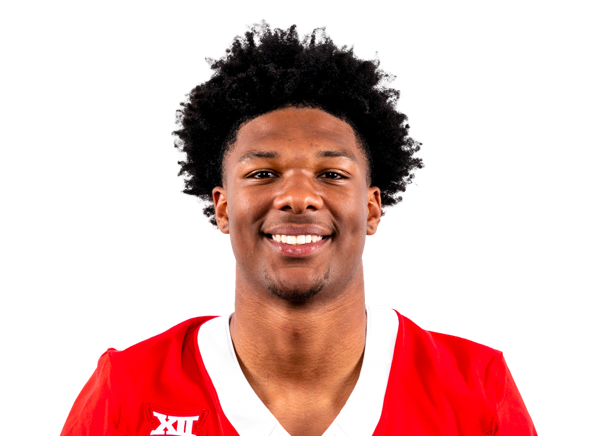
Keisean Henderson
QB #5 · HOU
2026 season numbers

Julian Lewis
QB #10 · COLO
2026 season numbers
The Read
Houston's quarterback: Keisean Henderson has thrown sparingly in the 2026 season, with a passing volume so low it signals either a run-heavy scheme or a very thin sample of meaningful snaps. When he has thrown, he has been accurate and clean, but there is not enough evidence to judge him as a proven commodity under real defensive pressure.
Colorado's quarterback: Julian Lewis has carried the full workload for the Buffaloes in the 2026 season and shown the ability to move the ball through the air with reasonable efficiency, mixing touchdowns with a small but real turnover rate that keeps him in the range of dependable rather than exceptional.
The protection: Henderson has not been touched behind the line of scrimmage in his limited work, which is a clean record that may say as much about how rarely he drops back as it does about his line. Lewis has been brought down in the backfield at a meaningful clip throughout the 2026 season, and that exposure to pressure has likely contributed to some of his turnovers and kept his efficiency from climbing higher.
Overall: The honest read is that Lewis has the larger body of work and is the more knowable quantity under center, while Henderson is statistically pristine but operating on too few attempts to trust the numbers at face value. Colorado holds the clearer picture at quarterback purely because the sample exists, but the edge comes with an asterisk since Lewis has shown he can be rattled when his protection breaks down. If Houston's run game forces Colorado into a catch-up situation, Lewis will be asked to do more of the work that has already cost him clean pockets.
Team Conditions
Schedule rest, recent form, and the current injury report.
HOUCOLO
Rest
Standard week of preparation, 6 days rest.
Standard week of preparation, 6 days rest.
Form
2026 record 6-2 (home 4-0, road 2-2)
2026 record 3-5 (home 2-2, road 1-3)
InjuryKey Players
J. Strozier Jr. (WR) · Questionable - Undisclosed
E. Noel (K) · Questionable - Undisclosed
J. Thurman (TE) · Out - Undisclosed
J. Hebert (RB) · Out - Leg
M. Tounkara (WR) · Out - Foot
M. Welch (RB) · Questionable - Hand
Z. Atkins (TE) · Out - Undisclosed
C. Williams (TE) · Questionable - Undisclosed
D. Scudero (WR) · Questionable - Undisclosed
M. Vickers (CB) · Questionable - Undisclosed
K. Perry (WR) · Questionable - Undisclosed
T. Martinez (LB) · Questionable - Undisclosed
The Read
Houston's availability: Houston is without confirmed starters at running back and receiver, including J. Hebert sidelined with a leg injury, which puts real strain on offensive skill position depth. A kicker is also questionable, though that is a lesser concern than the losses in the backfield and at receiver.
Colorado's availability: Colorado carries a broader injury cloud spread across both sides of the ball, with multiple receivers, both tight ends, a cornerback, and a linebacker all uncertain. That volume of question marks at skill positions on offense and in the secondary represents a wider concern than what Houston is dealing with.
Rest and form: Both teams come in on identical rest after a standard preparation week, so there is no edge there. Houston has been one of the more reliable teams through the 2026 season, losing only twice, though the most recent result was a loss; Colorado has struggled through a difficult stretch, losing more games than it has won, with several of those defeats coming as blowouts rather than close outcomes.
Overall: Houston arrives healthier and more consistent through the 2026 season, with a winning record built on a mix of close wins and comfortable ones. Colorado is navigating a broader injury list alongside a losing record that includes multiple lopsided losses, which puts them in a more vulnerable position even with the home-field advantage. The injury picture and form both point in the same direction for this matchup.
Weather & Stadium
Game-time conditions and whether they actually matter here.
48°F
Folsom Field
Open Air
Roof: Open air, conditions are in play
Temperature: 48°F, comfortable football weather, no effect on the passing game
Wind: 10mph from the W, a real factor on deep throws and long field goals
Precipitation: 2% chance, rain looks unlikely in the latest forecast
The Read
The stadium: Folsom Field is an open air venue in Boulder, so weather conditions are fully in play for Houston's visit to Colorado.
The conditions: The temperature is comfortable enough to leave the passing game unaffected, but the westerly wind carries enough force to create meaningful drag on deep throws and to push longer field goal attempts off their line.
Overall: Rain is not a concern, so the field stays dry. The wind does not favor one team over the other in a structural sense, since both offenses will face it and benefit from it in alternating drives. That said, the conditions apply light pressure to the deep passing game and to late game kicking situations, nudging the scoring environment slightly lower than it would be in still air.
Side Write-Up
Houston carries one of the most complete offensive profiles in the country into the 2026 season, converting third downs better than any other FBS program and protecting the ball at an elite level, and those strengths land squarely against a Colorado defense that, despite creating genuine disruption, still gives up points and yards at a rate below the national average. The Buffaloes arrive in worse health across the roster, with question marks at both receiver spots, both tight end positions, a cornerback, and a linebacker, while Houston's most significant absence is J. Hebert at running back alongside a receiver. Colorado has not just lost more than they have won in the 2026 season but have absorbed multiple blowout defeats, a pattern that reflects a team capable of falling apart rather than grinding through adversity. The collision at the line of scrimmage matters here, since Houston's run defense is one of the better units in the country and Julian Lewis has already been pressured into a meaningful number of backfield losses through the 2026 season, which puts strain on a quarterback whose turnover rate tends to climb when his pocket breaks down. The strongest counterargument to Houston is that Colorado's defense ranks among the very best nationally at making plays behind the line of scrimmage and generating takeaways, and a forced turnover early in Boulder could swing momentum in a way that benefits the home side. That concern is real, but Houston's ball security has been exceptional through the 2026 season, the kind of profile that neutralizes defenses hunting for turnovers rather than feeding them, and Colorado's offense is simply not equipped to win a scoring exchange against a team this efficient. Home field for a program carrying a wide injury list and a losing record built on blowout defeats is a weaker lever than it would be for a healthier, more confident team.
Final PickHouston
Total Write-Up
The Over is built on Houston's offense first, which has been one of the most productive and efficient units in the country through the 2026 season and runs into a Colorado defense that, despite generating a high volume of plays behind the line and forcing turnovers at a solid clip, still gives up points at a rate well below the national average. Houston's pass coverage has been one of the worst in the country through the 2026 season, and that exposure in the secondary gives Julian Lewis a real path to contribute points even as his offensive line continues to leave him vulnerable in the backfield. Colorado arrives with both tight ends and multiple receivers in an uncertain state, which thins out Lewis's options, but the structural case for the Over does not depend on Colorado matching Houston point for point. The wind at Folsom Field adds some pressure to the scoring environment, creating drag on deep throws and uncertainty on longer field goal attempts, but those conditions fall on both offenses equally and do not suppress the kind of controlled, sustained drive production that Houston runs. The clearest counterargument against the Over is that Colorado's offense ranks near the bottom of FBS in scoring, meaning the game could become lopsided in a way that chokes out meaningful possessions late and deflates the total. That concern loses weight when measured against Houston's ability to keep scoring deep into games alongside a secondary that has been among the most exploitable in the country through the 2026 season, giving Lewis enough of an opening to add to the ledger even from behind.
Final PickOver

Written by
VIMB
47,000+
Followers Across All Socials
17+
Brand Partners
3+
Years Experience
1,000+
Games Tested
This information is for entertainment purposes only and is not any form of financial or gambling advice. Sports involve high variance therefore always be responsible and manage your risk accordingly.
All stats are publicly graded and pulled from real sportsbook accounts.
GreekOracleNCAAF Record: 158 - 83Tennis+$26k
NCAAF+$25k
Soccer+$14k
Other games this week











Promos for Your Next Bet
Current offers for your area. Pick your region and the list updates.
Select Your Location