
Arizona Cardinals vs Seattle Seahawks, NFL Picks

All stats are publicly graded and pulled from real sportsbook accounts.
 THEMONEYPLAYSNFL Record: 949 - 531
NFL+$171k
MMA+$42k
Others+$23k
Market Action
ARI @ SEA
Live odds tracking
SEA

OWLS INSIGHTAPI / DATA10% OFF First 3-Months
✓Betting Splits✓Real-Time Odds✓Websocket Push
Model Projection
These numbers come from a power-rating model built on the method Billy Walters lays out in his book Gambler.
Projected Spread
SEA -10.5
Market
SEA -10.5 (-110)
Projected Total
46
Market
44.5 (O -105 / U -110)
Projected Moneyline
SEA -350
Market
SEA -625
This projection and current market action are supplementary and do not influence the final qualitative pick and analysis of today's game.
Season stats ordered from most to least relevant. Longer bar, stronger league standing.
ARISEA
Matchup Breakdown
Arizona's offense: One of the least productive units in football during the 2026 season, Arizona struggles to move the ball efficiently and finishes at the very bottom of the league in both yards per play and red zone touchdown rate. They have been careful with the football, but converting drives into points has been a persistent problem all season.
Seattle's offense: A solid, above-average group that moves the ball well and scores at a respectable rate in the 2026 season. The glaring concern is turnovers, as Seattle gives the ball away at one of the highest rates in the league.
Seattle's defense: The best defense in the league in the 2026 season, leading all teams in total yards and pass yards allowed while ranking near the very top in third-down stops and takeaways. The one soft spot is the red zone, where opponents convert touchdowns at a higher rate than most defenses allow.
Arizona's defense: Among the most porous units in football during the 2026 season, Arizona allows more points than any other team and struggles to contain both the pass and the run. Their red zone defense is also near the bottom of the league, giving opposing offenses a strong chance to finish drives once they get close.
Overall: Seattle holds a commanding edge in this matchup. Their suffocating defense is perfectly positioned to punish Arizona's offense, which already generates the fewest yards per play in the league and converts in the red zone at the worst rate in football. Arizona's defense, meanwhile, has been the softest scoring environment in the entire league this season, giving Seattle a favorable backdrop to score despite its own ball-security issues.
Quarterback Matchup
The two starters, and how each has actually played.
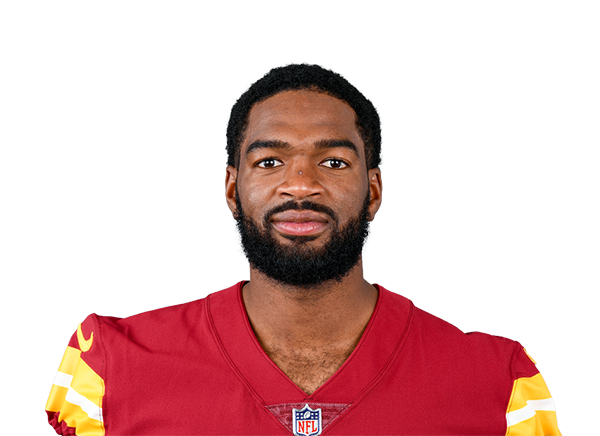
Jacoby Brissett
QB #7 · ARI
2026 season numbers
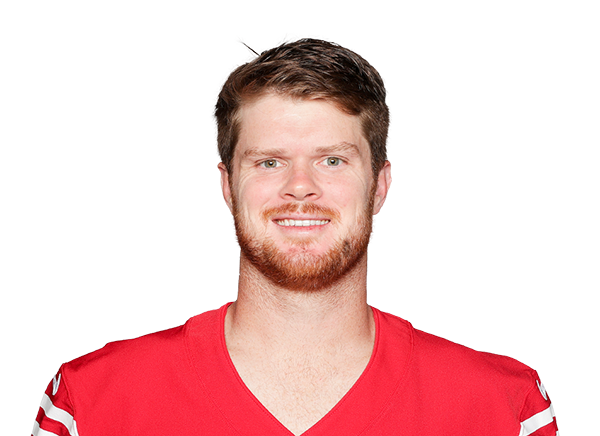
Sam Darnold
QB #14 · SEA
2026 season numbers
The Read
Arizona's quarterback: Brissett has been a careful, accurate manager in the 2026 season, protecting the ball reasonably well and completing passes at a solid rate. He operates mostly underneath, producing modest yardage totals without much downfield pop.
Seattle's quarterback: Darnold pushes the ball further down the field than Brissett does, which gives his offense a bigger-play dimension. The tradeoff is a looser grip on the ball, as his interception total is notably higher for the same number of touchdowns.
The protection: Both lines have allowed their quarterback to be brought down at nearly identical rates through the 2026 season, so neither starter arrives with a meaningful edge there. Heavy pressure on either would likely expose their limitations in a hurry.
Overall: Brissett holds a narrow edge under center, built on better accuracy and a cleaner turnover ledger rather than any explosive upside. Darnold's ability to stress a secondary vertically keeps the gap from being wide, but his tendency to give the ball away blunts that advantage. In a game where both quarterbacks are average at best, ball security is the real separator, and it leans Arizona's way.
Team Conditions
Schedule rest, recent form, and the current injury report.
ARISEA
Rest
Standard week of preparation, 7 days rest.
Standard week of preparation, 5 days rest.
Form
2026 record 2-5 (home 0-3, road 2-2)
2026 record 4-3 (home 3-1, road 1-2)
InjuryKey Players
M. Melton (CB) - OCT 31 · Questionable
A. Wingard (S) - OCT 31 · Questionable
W. Nolen III (DT) - OCT 30 · Out
H. Froholdt (C) - OCT 29 · Questionable
J. Brooks (WR) - OCT 27 · Injured Reserve
T. Reiman (TE) - OCT 26 · Out
J. Conner (RB) - OCT 26 · Injured Reserve
D. Lock (QB) - NOV 1 · Questionable
C. Cross (OT) - NOV 1 · Out
V. Jones Jr. (RB) - NOV 1 · Out
U. Nwosu (LB) - OCT 31 · Doubtful
R. Shaheed (WR) - OCT 31 · Out
J. Price (RB) - OCT 31 · Injured Reserve
B. Pili (DT) - OCT 30 · Questionable
P. O'Connell (LB) - OCT 29 · Questionable
The Read
Arizona's availability: Arizona is missing James Conner from the backfield on injured reserve and is short at receiver and tight end as well, with secondary and interior line questions adding to the pile. The absences touch several areas but no single loss fundamentally changes what Arizona is capable of schematically.
Seattle's availability: Seattle lost Charles Cross up front, a meaningful piece on the offensive line, and their backfield depth has been worn down by multiple absences leaving limited options in the run game. The backup quarterback situation is unsettled, adding a fragility behind the starter that is worth noting.
Rest and form: Arizona had a full standard week to prepare while Seattle had a slightly shorter turnaround coming into this matchup. Arizona has been one of the weaker teams in the 2026 season with a losing record and has struggled particularly at home, while Seattle sits with a winning record and has been tough to beat on their own field.
Overall: Seattle holds the clearer real-world edge here, backed by a winning record in the 2026 season and strong home performance that gives them a meaningful structural advantage. Arizona has actually fared better on the road than at their own venue in the 2026 season, but their overall record and accumulated absences leave them as the team with more ground to make up. Seattle's injury concerns are real, especially up front, but the balance of form and preparation tips in their favor.
Weather & Stadium
Game-time conditions and whether they actually matter here.
55°F
Lumen Field
Open Air
Roof: Open air, conditions are in play
Temperature: 55°F, comfortable football weather, no effect on the passing game
Wind: 5mph, light enough to leave the passing and kicking game alone
Precipitation: 42% chance, worth monitoring before kickoff
The Read
The stadium: Lumen Field is an open-air venue in Seattle, meaning weather is fully in play for this matchup. There is no roof to neutralize the elements.
The conditions: Temperature is comfortable and wind is negligible, leaving the passing and kicking game undisturbed. The precipitation probability is elevated enough that a wet field is a realistic outcome, which could introduce some ball-handling variability if rain arrives at kickoff.
Overall: Temperature and wind present no meaningful case for nudging the total in either direction. The precipitation probability is the only condition with any real reach, and a wet surface would provide a modest check on the aerial tendencies both Arizona and Seattle leaned on through the 2026 season. If the field stays dry, weather is effectively a non-factor in this one.
Side Write-Up
Arizona arrives in Seattle as a team that has actually handled road games better than home games in the 2026 season, and a ten-and-a-half-point spread asks a lot given the structural messiness on Seattle's side of the ball. The strongest argument against the Cardinals covering is Seattle's defense, which led the entire league in total yards and pass yards allowed during the 2026 season and would seem perfectly built to bury the least productive offense in football. But Seattle's path to a blowout runs directly through its own turnover problems, and an offense that gives the ball away at one of the highest rates in the league will routinely hand Arizona field position and kill its own scoring drives before the margin can balloon. Brissett holds the edge in ball security at quarterback, meaning Arizona's offense has a real chance to grind out first downs and occasionally convert on those rare trips inside the red zone that Seattle's defense does allow at a soft rate. Seattle also comes into this matchup with a shorter week of preparation, a weakened offensive line after losing Charles Cross, and a depleted backfield that limits the run-game options needed to put a team away in the fourth quarter. The Cardinals are missing pieces too, particularly in the backfield and at receiver, but those absences do not change Arizona's schematic identity as a careful, ball-control offense designed to stay on the field and avoid explosions in either direction. A wet field, if the precipitation comes in, only adds to the ball-handling volatility that already favors a team built around efficiency over explosion. The evidence points to a competitive enough game that a double-digit spread holds more cushion than the matchup warrants.
Final PickArizona +10.5
Total Write-Up
The under case here is built on the collision between the best defense in football and the worst offense in football, and that collision runs in only one direction. Seattle's defense led the entire league in total yards and pass yards allowed during the 2026 season, rated near the top in third-down stops and takeaways, and faces an Arizona offense that finishes at the very bottom in yards per play and red zone touchdown rate. Brissett operates almost entirely underneath with modest yardage totals and no downfield pop, meaning the Cardinals are unlikely to generate the kind of chunk plays that turn a low-scoring game into a shootout. The legitimate counterargument is Arizona's defense, which allowed more points than any other team in the 2026 season and creates what looks like a wide-open scoring environment for Seattle. But Darnold's interception total has been notably high relative to his touchdowns, and his tendency to give the ball away blunts the vertical passing dimension that could otherwise stress Arizona's porous secondary. Seattle also arrives with a thinned offensive line after losing Charles Cross and depleted backfield options that reduce the team's ability to sustain drives and convert near the goal line. Elevated precipitation probability adds another layer of pressure on the ball, which particularly hurts an offense already prone to turnovers. Both defenses hold a real structural grip on the total even from opposite ends of the quality spectrum, and the evidence across offense, defense, quarterback, and conditions all points in the same direction.
Final PickUnder 44.5

Written by
VIMB
47,000+
Followers Across All Socials
17+
Brand Partners
3+
Years Experience
1,000+
Games Tested
This information is for entertainment purposes only and is not any form of financial or gambling advice. Sports involve high variance therefore always be responsible and manage your risk accordingly.
All stats are publicly graded and pulled from real sportsbook accounts.
THEMONEYPLAYSNFL Record: 949 - 531NFL+$171k
MMA+$42k
Others+$23k
Tools
Loading tools…
Other games this week
 NFL
 VS
 Baltimore Ravens vs Buffalo Bills1:00 PM ET›NFL
 VS
 Tennessee Titans vs Cincinnati Bengals1:00 PM ET›NFL
 VS
 Arizona Cardinals vs Dallas Cowboys1:00 PM ET›NFL
 VS
 Minnesota Vikings vs Detroit Lions1:00 PM ET›NFL
 VS
 Las Vegas Raiders vs New York Jets1:00 PM ET›NFL
 VS
 Cleveland Browns vs Pittsburgh Steelers1:00 PM ET›NFL
 VS
 Atlanta Falcons vs Tampa Bay Buccaneers1:00 PM ET›NFL
 VS
 Indianapolis Colts vs Jacksonville Jaguars1:00 PM ET›NFL
 VS
 Los Angeles Chargers vs Los Angeles Rams4:05 PM ET›NFL
 VS
 Kansas City Chiefs vs Denver Broncos4:25 PM ET›NFL
 VS
 New England Patriots vs Miami Dolphins4:25 PM ET›NFL
 VS
 Philadelphia Eagles vs Washington Commanders8:20 PM ET›
Free Promos for Your Next Bet!
Current offers for your area. Pick your region and the list updates.
Select Your Location